What is slippage in crypto?

Slippage in crypto is the difference between the price expected when a trade or swap is submitted and the price at which it is actually executed. The difference may be favorable or unfavorable, and it is usually caused by changing market prices, limited liquidity, or the size of the order. Although slippage cannot always be removed, its effect can often be reduced. The article below explain how it works, how it is calculated, and which safeguards can be used.
How Does Slippage Work in Crypto Trading?
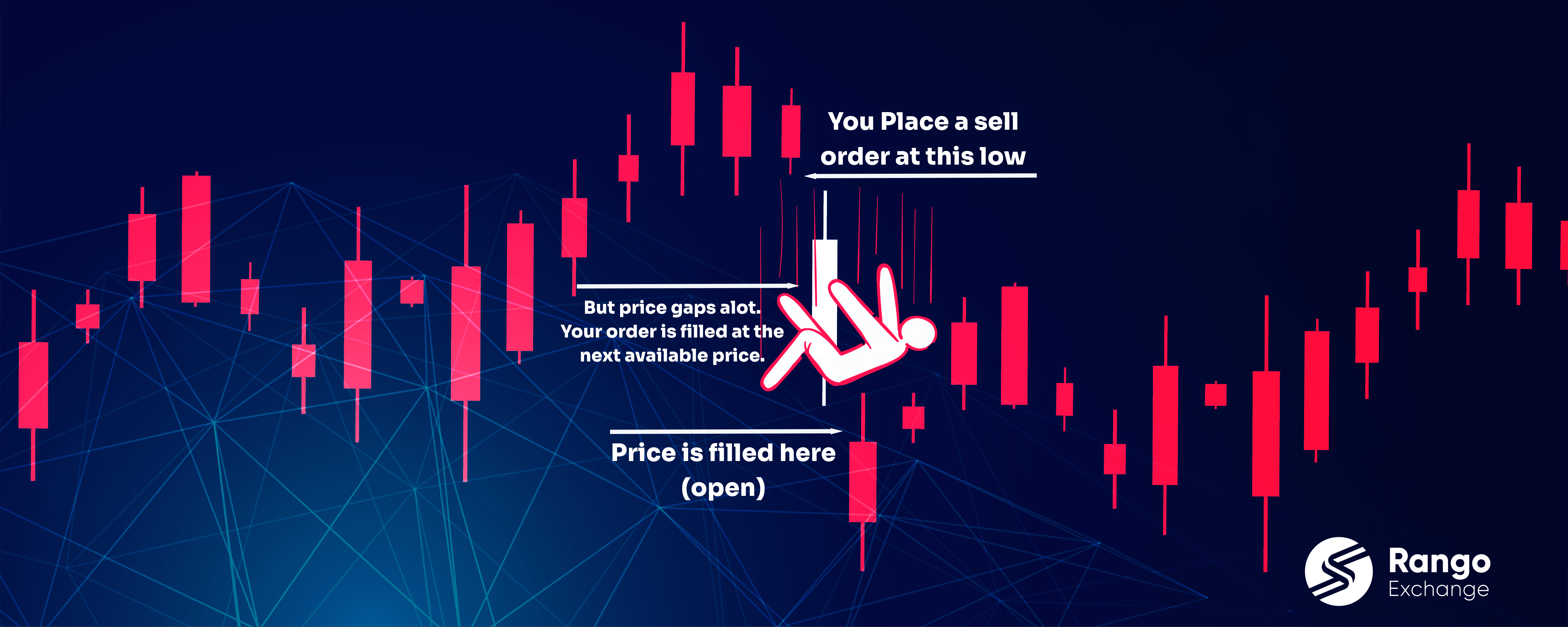
When an order is submitted, the displayed quote represents the price available at that moment. Execution may occur later or require liquidity from several price levels. If that price changes before completion, a different final price is received; this difference is the basic slippage meaning in trading.
Positive vs. Negative Slippage
Positive slippage is recorded when an order is filled at a better price than expected, while negative slippage occurs when the fill is less favorable. For a buy, paying less is positive; for a sale, receiving more is positive. Slippage is therefore not automatically a loss.
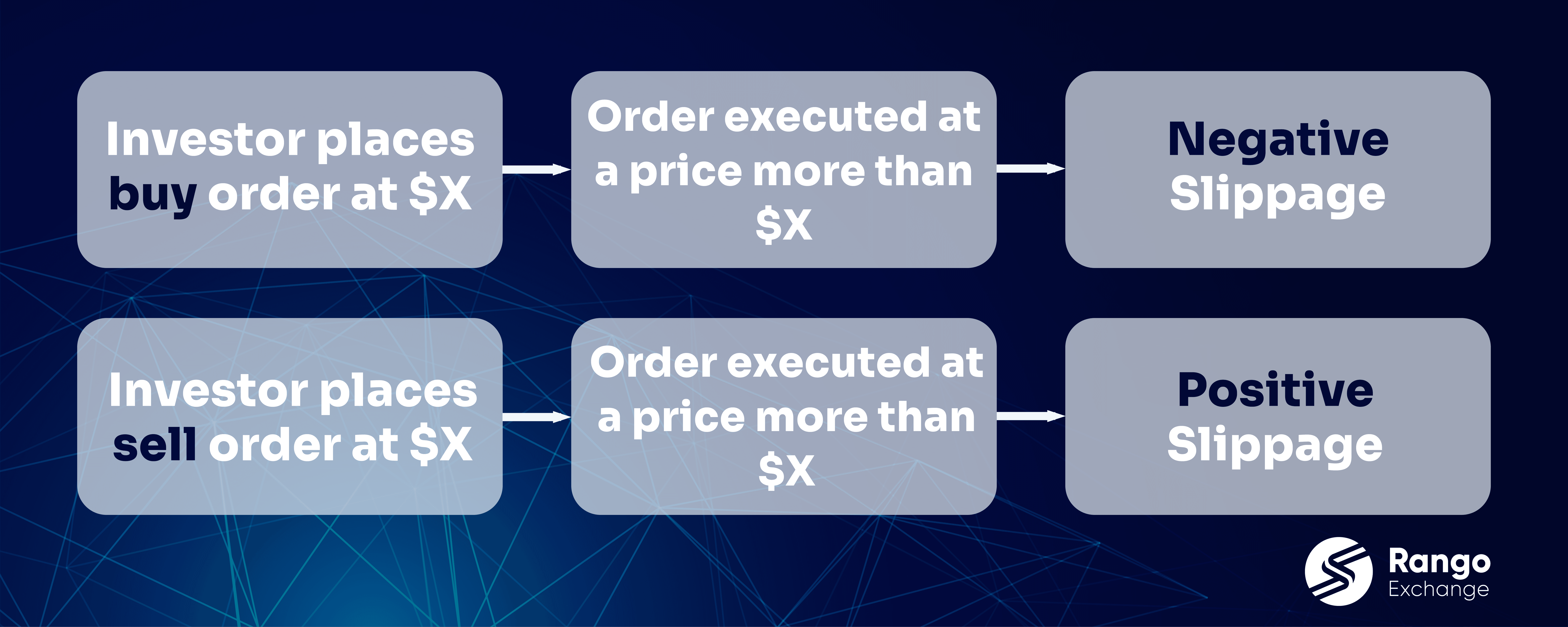
Suppose ETH is quoted at $3,000 when you place a market buy, but the order is filled at $3,015. The $15 difference is a negative slippage of 0.5%, meaning you paid slightly more than expected. If the trade is filled at $2,985 instead, you receive a positive slippage of 0.5% and get a better price. Slippage reflects the difference between the expected and executed prices. Trading, network, and provider fees are separate costs and should not be included when calculating it.
Why Does Slippage Happen in Crypto?
Crypto price slippage is most often associated with volatility, insufficient liquidity, or a large order consuming several available prices. The mechanism differs across venues, but the quoted price cannot be maintained for the entire order.
Market Volatility
Market volatility refers to how quickly and significantly prices move. In fast-moving markets, the price may change between the moment you submit a trade and the moment it is confirmed. This is more common during sharp market swings, major news announcements, or large liquidations. Market orders face greater slippage risk because they prioritize completing the trade quickly rather than securing an exact price.
Low Liquidity and Large Trades
Liquidity describes how easily an asset can be bought or sold without significantly affecting its price. When liquidity is low, there may not be enough volume available at the quoted price. As a result, a large order may be filled across several price levels, with each portion executed at a progressively worse rate. Even for Bitcoin or Ethereum, slippage can vary depending on the trading pair, exchange or DEX, available market depth, and order size. In general, larger trades and less liquid pairs are more likely to experience higher slippage.
What Is Slippage Tolerance?
Slippage tolerance is the maximum price movement accepted before an onchain swap is rejected. It is usually entered as a percentage, such as 0.5% or 1%. If execution falls outside that limit, the transaction may revert, although network gas may still be spent.
What Happens When Slippage Tolerance Is Too Low or High?
If slippage tolerance is set too low, even a small price movement can push the quote outside your permitted range and cause the transaction to fail. You may then need to submit it again and, depending on the network, still pay a gas fee for the failed attempt. If the tolerance is too high, the trade is more likely to succeed, but you may receive a considerably worse price than expected. A wider tolerance can also increase exposure to maximal extractable value (MEV), where automated actors profit by reordering or inserting transactions around your trade.
What Is the Best Slippage Setting for Crypto?
There is no single best slippage percentage for every crypto swap. Lower tolerance may work well for liquid pairs during calm market conditions, while volatile tokens, low-liquidity pools, or large trades may require a wider range. Before confirming a swap, review the suggested tolerance together with the price impact, minimum amount received, available liquidity, and current volatility. If you are using an unfamiliar token or route, consider testing it with a smaller amount first.
How to Calculate Crypto Slippage?
Slippage can be expressed in currency terms or as a percentage. The quoted and average execution prices should use the same unit. For swaps, the expected and actual output may be compared instead, with fees separated where possible.
Slippage Formula and Example
You can calculate the percentage difference between the expected and final execution prices using this formula:
Slippage (%) = |Execution price − Expected price| ÷ Expected price × 100
For example, if a token is quoted at $100 but your order is executed at $101, you experience 1% negative slippagebecause you paid more than expected. If it is executed at $99, you receive 1% positive slippage because you secured a better price.
Because the formula uses an absolute value, it only shows the size of the difference. You must label the result as positive or negative based on whether the execution price was better or worse for your trade.
Slippage on Centralized vs. Decentralized Exchanges
Slippage can occur on centralized exchanges (CEXs) and decentralized exchanges (DEXs), but liquidity is organized differently. A CEX generally uses an order book, whereas many DEXs use liquidity pools and automated market makers. Venue-specific information should therefore be assessed.
| Comparison point | Centralized exchange (CEX) | Decentralized exchange (DEX) |
|---|---|---|
| Main liquidity model | Order book with bids and asks | Liquidity pools, often priced by an AMM |
| Main slippage signals | Spread, order-book depth, and order size | Pool depth, price impact, route, and onchain delay |
| Common price control | Limit order | Slippage-tolerance setting and minimum received |
| Main trade-off | Price control may prevent an order from filling | Tight tolerance may cause a transaction to revert |
Order Books on Centralized Exchanges
An order book displays the available buy orders (bids) and sell orders (asks) at different price levels. When you place a market order, the exchange fills it at the best available price first and then moves through additional levels until the full amount is completed.
If the order is large or market depth is limited, part of it may execute at increasingly worse prices. As a result, the average execution price can differ from the price shown when you submitted the order. A limit order gives you more price control by setting the maximum purchase price or minimum sale price, but it may fill only partially, or not at all.
Liquidity Pools and AMMs on DEXs
An automated market maker (AMM) is a smart contract that prices assets based on the balances within a liquidity pool instead of matching buyers with sellers through an order book. When a swap changes the ratio of assets in the pool, the price moves during the trade. This effect is known as price impact, and it becomes larger when the trade size is high relative to the pool’s liquidity.
DEX slippage can also occur if the quoted price changes between submitting the transaction and its onchain execution. Therefore, price impact and slippage are related but not identical: price impact comes from the trade’s effect on the pool, while slippage measures the difference between the expected and final execution results.
How to Reduce Slippage in Crypto
Crypto slippage cannot be avoided completely, but it can be reduced by limiting market-order exposure, selecting liquid pairs, checking the minimum output, and avoiding unstable market conditions.
Use Limit Orders and Liquid Trading Pairs
A limit order specifies the worst acceptable price, but it may remain unfilled. When immediate execution is needed, deeper liquidity and tighter bid-ask spreads are generally preferred because more volume can be absorbed near the quoted price.
Split Large Trades and Avoid Volatile Periods
A large order may be divided when smaller transactions produce a better result after fees. A small test may be conducted before the main transfer, while trading during sudden volatility may be deferred. Splitting is not always cheaper, so additional network and trading costs must be compared.
Use a DEX Aggregator to Find Better Routes
A DEX aggregator compares liquidity sources and may split a swap across pools or intermediate assets. For same-chain and cross-chain swaps, expected output, price impact, bridge costs, gas, and route complexity should be reviewed. The route with the lowest slippage may not be the cheapest overall, so the net amount received at the destination remains the better comparison. You can use Rango Exchange to compare available routes and their estimated outputs before confirming your swap.
Summary
Slippage is the gap between an expected price and the actual execution price. It may be positive or negative, but unfavorable results become more likely with high volatility, low liquidity, or large orders. Order-book depth is central on a CEX, while pool depth, price impact, and onchain timing also matter on an AMM-based DEX. Small test transactions, liquid pairs, limit orders, realistic tolerance settings, and careful quote reviews can reduce exposure. Before approval, the minimum received and total cost should be checked rather than relying only on the headline exchange rate.
Resources
Frequently asked questions
Check out most commonly asked questions, addressed based on community needs. Can't find what you are looking for?
Contact us, our friendly support helps!
Is Slippage Always Negative?
No. Slippage can be positive, negative, or zero. Positive slippage occurs when a trade executes at a better price than expected, while negative slippage means the final price is worse. Zero slippage occurs when the expected and executed prices match. However, positive slippage is not guaranteed and depends on market conditions and how the platform handles price improvements.
Is Slippage the Same as Price Impact?
No. Although they are closely related, they describe different effects. Price impact is the price change caused directly by your trade, particularly when the order is large compared with the available liquidity in a pool or order book. Slippage is the overall difference between the expected and final execution prices. It may include price impact, but it can also result from market volatility, low liquidity, transaction delays, or competing trades executed before yours.
Can Crypto Slippage Be Avoided Completely?
Not in every trade. A limit order can prevent execution beyond a chosen price, but the order may remain unfilled or fill only partially. Market orders and onchain swaps cannot always guarantee an exact execution price because prices may move before the trade is completed. You can reduce slippage by choosing liquid trading pairs, splitting large orders, trading during calmer periods, comparing available routes, and setting an appropriate slippage tolerance. These steps can lower the risk, but they cannot eliminate it completely.