How to Swap Crypto with Rango?

Swapping crypto may involve a direct exchange on one network or a route connecting several decentralized exchanges, bridges, and blockchains. Although both processes can be started through one interface, their fees, timing, and execution risks are not identical. Rango is used to compare available same-chain and cross-chain routes while final approval remains in the connected wallet. Read the full guide below to learn how a pair can be explored, how a swap is completed, and which details should be checked before confirmation.
How to swap crypto?
The swap process begins by connecting a wallet, after which the available balance, token pair, networks, amount, and possible routes can be reviewed in sequence. Rango coordinates route discovery and transaction preparation, while approvals and transaction signatures remain under the user’s control in the connected wallet.
Connect Your Wallet
A compatible wallet should first be connected through the official Rango dApp. Connecting allows the relevant address and available balances to be detected, but it does not by itself authorize a swap or transfer funds. The domain should be verified before connection, and a seed phrase or private key should never be entered into the interface, a pop-up, or a support form.
Select a Token Pair
After the wallet is connected, the input token and the network on which it is held can be selected. The required output token and destination network should then be chosen according to where the asset will be stored or used. Both sides should be rechecked when identical symbols appear across several chains or when native, wrapped, and bridged versions are available.
Enter the Swap Amount
The amount to be exchanged can then be entered, and the available wallet balance should be checked before a quote is requested. Enough native currency should be retained on the source network to cover gas and, when required, token approval. A small test amount may be favored before a material transfer through an unfamiliar pair, network, or provider.
Compare Routes and Confirm the Transaction
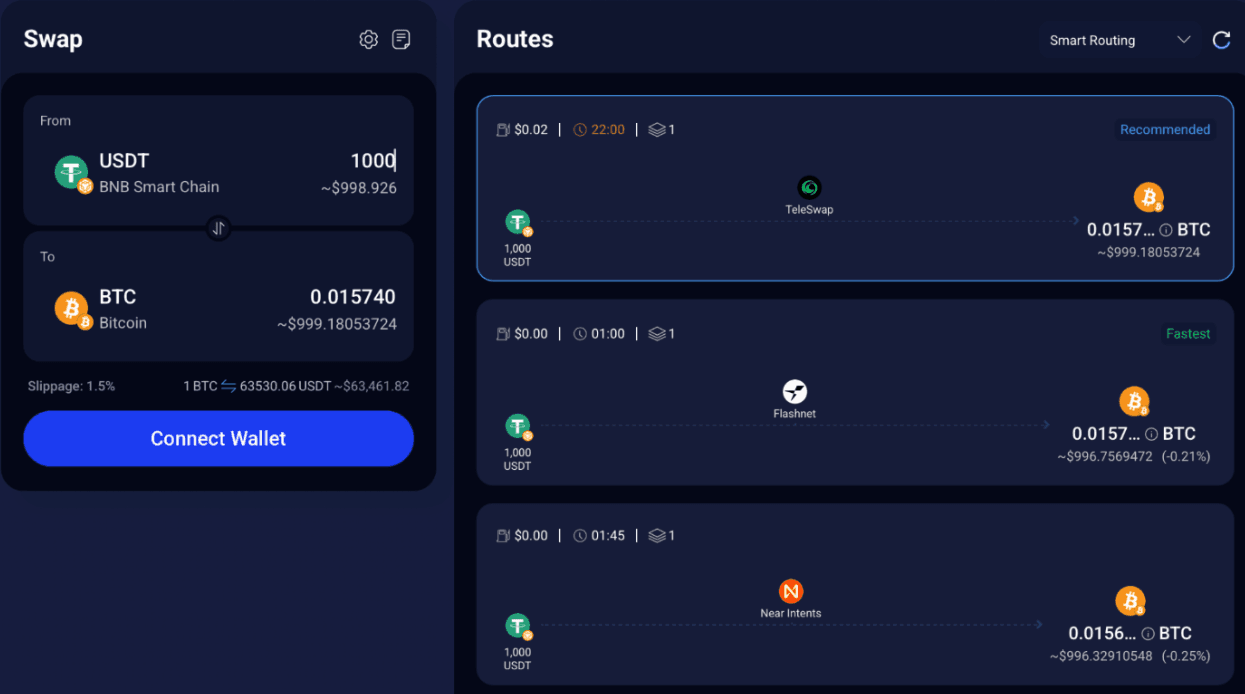
Available routes can be compared by expected output, minimum received amount, gas and provider fees, estimated completion time, and the DEXs or bridges involved. The route with the highest displayed output may not provide the strongest overall result if it requires additional steps, higher gas, or unfamiliar contracts. After a route is selected, each approval and transaction request shown by the wallet should be matched with the Rango preview before signing; an expired quote should be refreshed rather than reused.
What Makes a Crypto Swap Route Efficient?
An efficient route should be assessed by net output, execution time, available liquidity, price impact, reliability, and the number of required actions, not by the headline exchange rate alone. A route showing slightly more output may become less favorable once gas or an additional approval is included. Rango compares routes using factors that include output, fees, and user experience, according to its routing documentation.
Supported Tokens and Networks
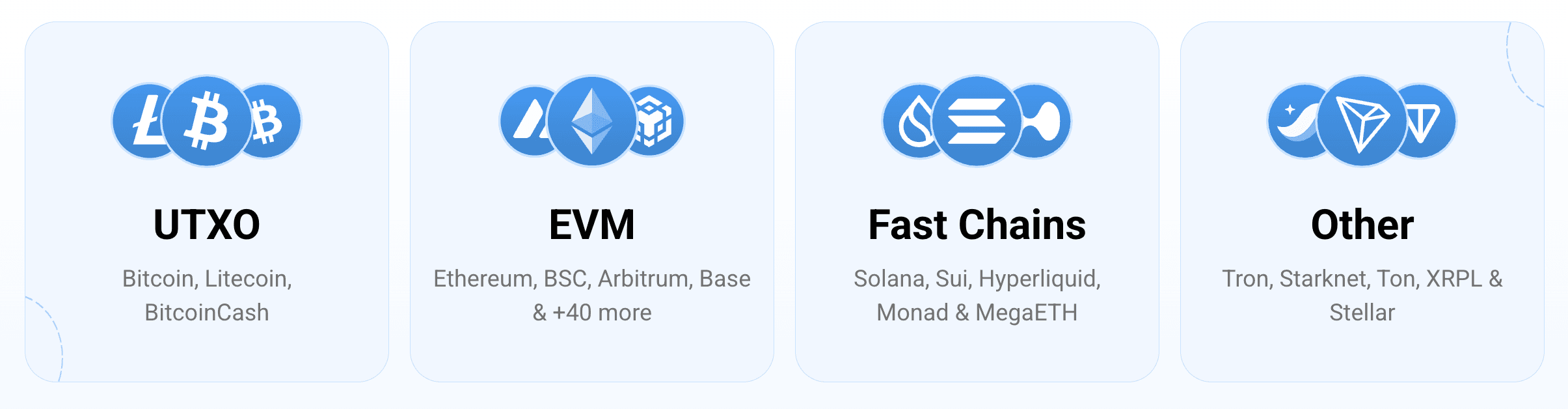
A route can only be constructed when the selected assets and networks are covered by compatible DEXs, bridges, or liquidity providers. Rango supports major EVM networks such as Ethereum, Arbitrum, Optimism, BNB Chain, Polygon, Avalanche, and Linea, alongside non-EVM environments including Bitcoin, Solana, TRON, Sui, and Osmosis. Widely used assets such as BTC, ETH, USDT, USDC, SOL, and BNB can be found across supported routes, although availability still varies by token, network, and direction. The correct version must be chosen because, for example, USDT on Ethereum and USDT on TRON are separate on-chain assets despite sharing the same ticker.
Fees, Slippage, and Expected Output
Expected output may be affected by protocol fees, network gas, underlying provider or bridge fees, price impact, and slippage (the permitted difference between quoted and executed output). In a multi-step route, slippage may apply across several swaps, so the total fees, net output, and minimum received amount should be reviewed before confirmation.
Same-Chain vs. Cross-Chain Execution
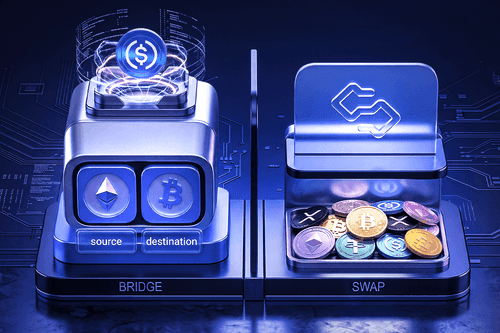
A same-chain swap exchanges tokens without leaving the current blockchain, while a cross-chain swap changes the network and may also change the asset. Cross-chain execution can contain a source swap, bridge or liquidity-transfer step, and destination swap, adding more checkpoints.
How to Find the Right Crypto Swap Pair
The right crypto swap pair is defined by both the asset currently held and the exact asset needed after execution. In a cross-chain swap, a pair is not limited to two token symbols; it also includes the source and destination networks. Identifying all four elements helps prevent a route from delivering the wrong network version or a token that is not supported by the intended wallet or application.
Start with the Tokens You Want to Exchange
The selection should begin with the exact token and network shown in the wallet, followed by the asset and network required for the next action, such as holding, trading, making a payment, or using a DeFi application. If USDC is held on Arbitrum but ETH is needed on Base, all four parameters, USDC, Arbitrum, ETH, and Base, should be specified. The destination token version should also be accepted by the intended application, while enough native currency should be retained on the source network for gas.
Check Market Price and Trading Activity
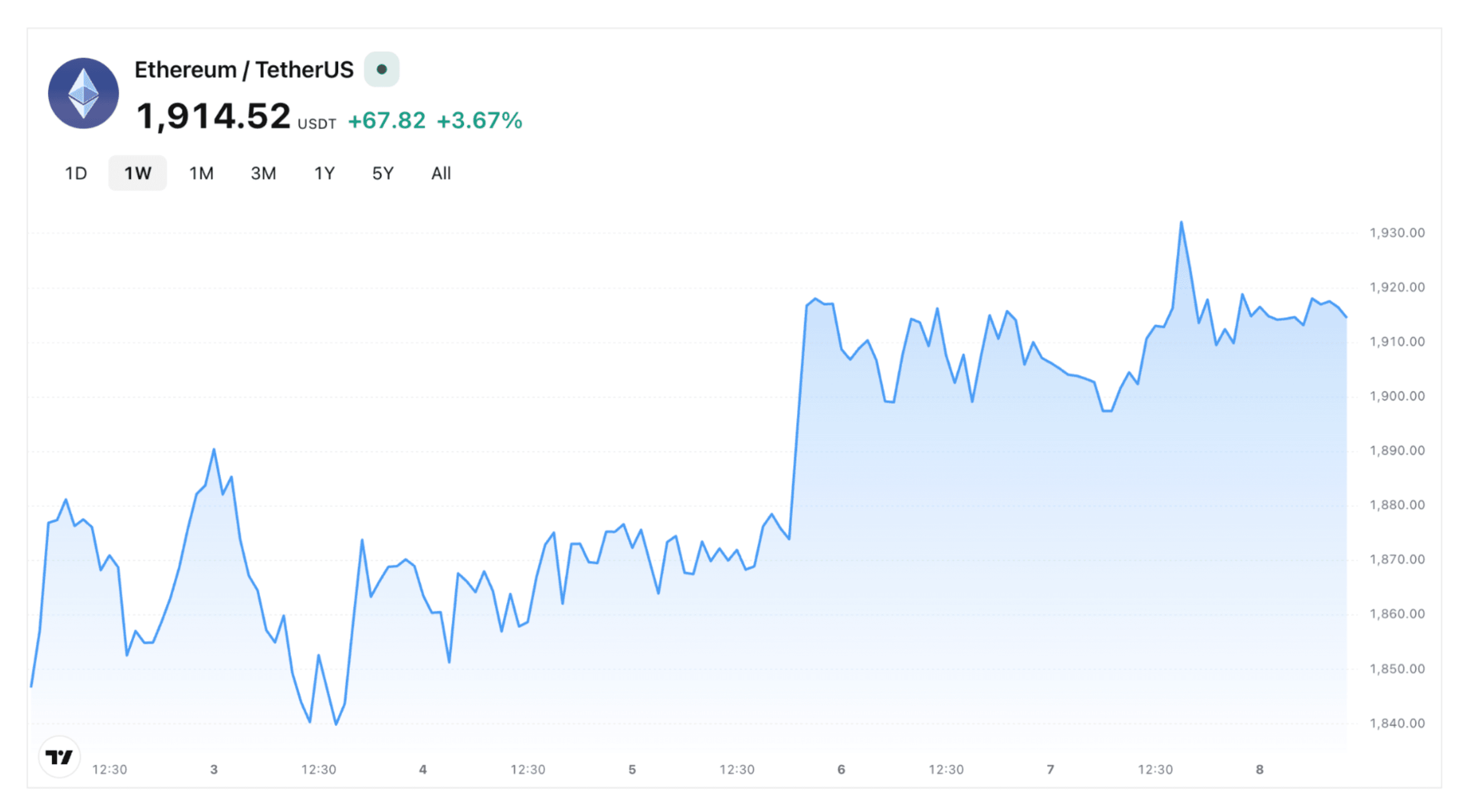
Recent price movement, trading activity, and short-term volatility can be reviewed through the chart available on supported token-pair pages before the swap interface is opened. Broader cryptocurrency prices and market activity may also be used as an external reference to identify unusual price changes or periods of limited activity. These figures provide market context rather than an executable quote, since the final route is calculated separately using the swap amount, available liquidity, gas, price impact, slippage, and provider fees.
Confirm the Source and Destination Networks
The source network must match where the input tokens are held, while the destination should match where the output will be used or stored. The recipient address format and token contract should also be compatible with the destination.
Exploring More Crypto Pairs
Pair discovery can be used to explore popular combinations, compare possible directions, and find assets beyond the pairs already known. It should be treated as the start of route assessment rather than as a guarantee of liquidity or fixed pricing.
Browse Available Swap Pairs on the Rango Swap Page
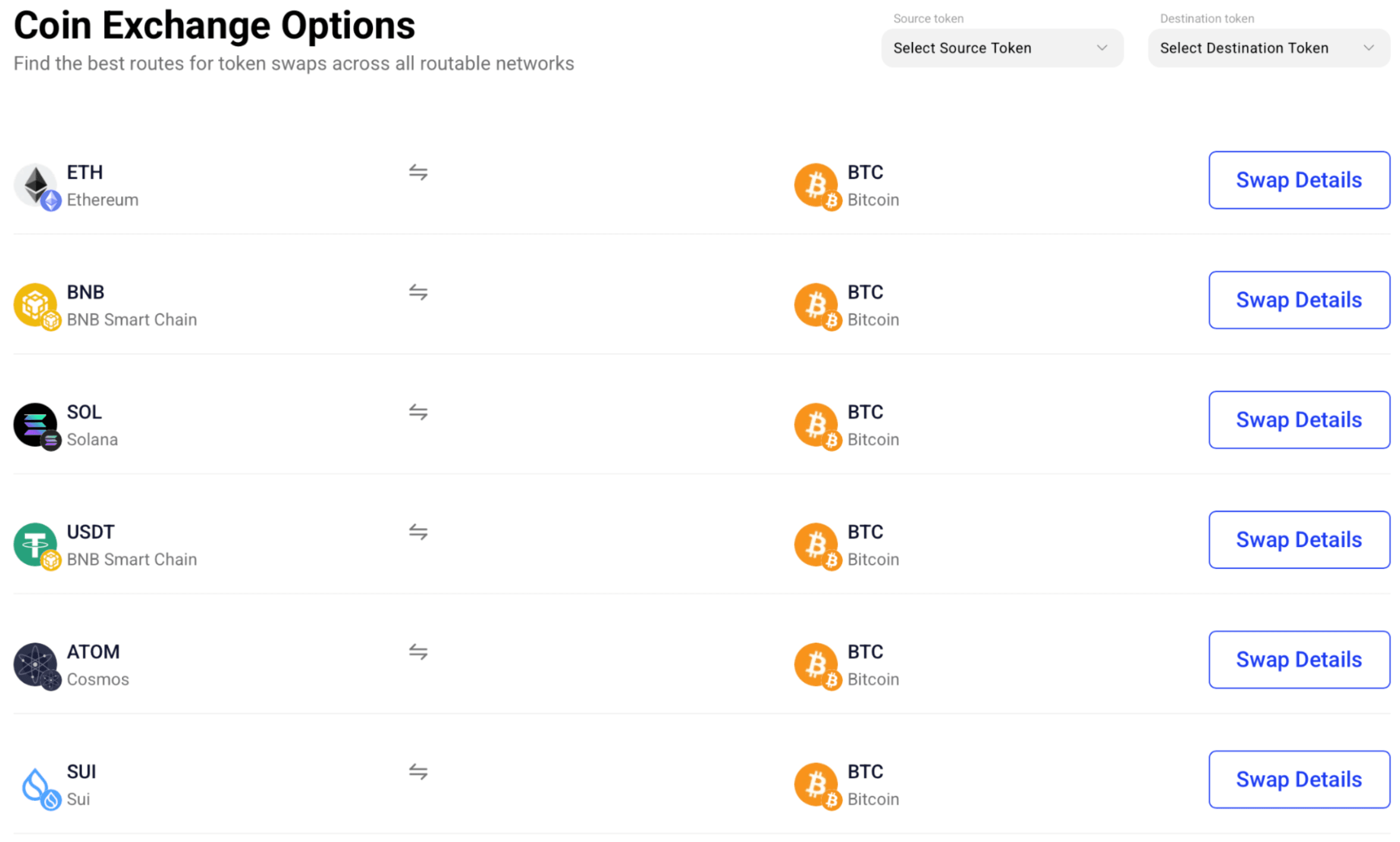
The Rango Swap page surfaces popular directional pairs involving assets such as BTC, ETH, SOL, BNB, USDT, ATOM, and SUI, alongside many additional token and network combinations. Each listing connects an input asset and network with a possible output asset and network, making same-chain and cross-chain opportunities easier to distinguish. The directory can be browsed across multiple pages, while combinations not prominently listed can still be entered as a custom swap when a route is available.
Open Dedicated Token-Pair Pages
A dedicated token-pair page narrows the discovery process to one exchange direction, such as ETH to BTC or SOL to ETH. Relevant asset, network, and market context can be reviewed without searching through unrelated combinations. Direction still matters: ETH to BTC and BTC to ETH are separate pairs, and identical token symbols may represent different on-chain combinations when another source or destination network is selected.
Review Source and Destination Asset Details
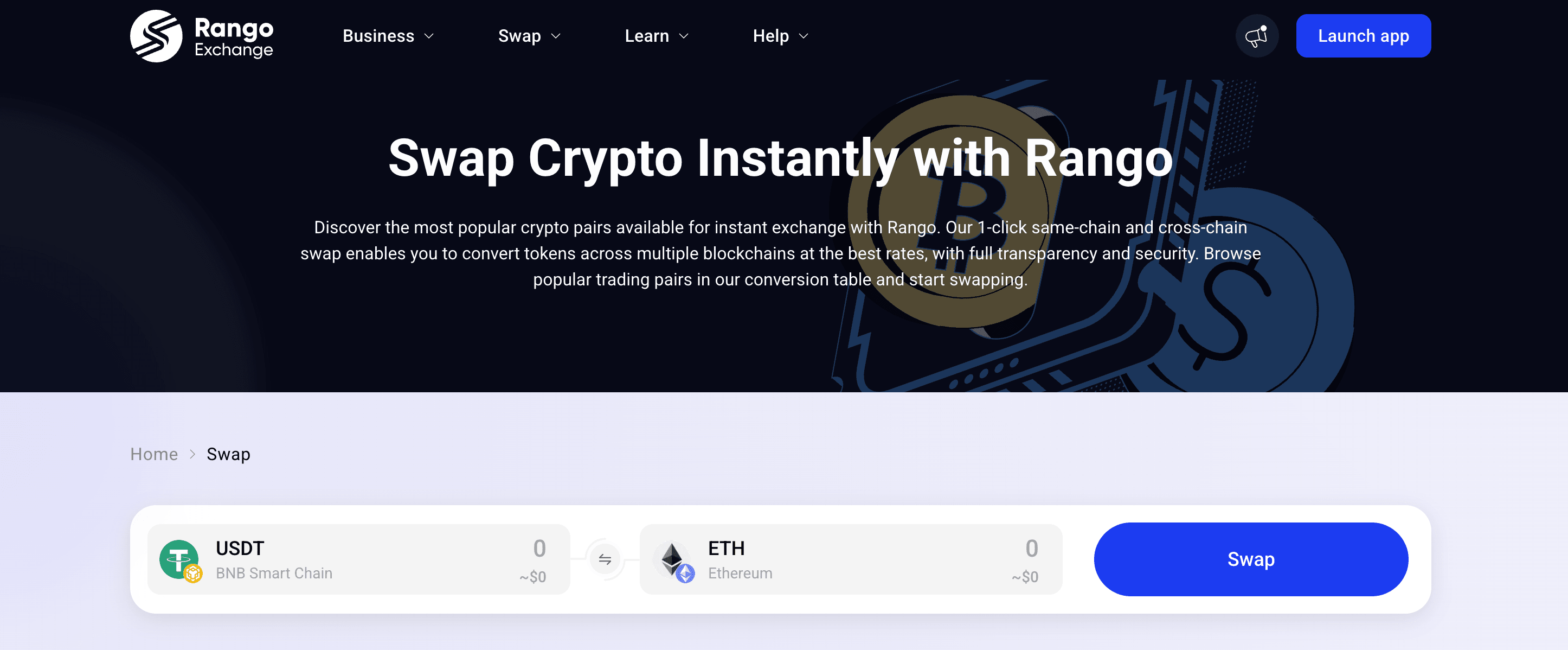
The source and destination asset details should be reviewed together, including token name, ticker, network, contract address, and whether the asset is native or bridged. Stablecoins and wrapped assets can have several versions on the same ecosystem, with different liquidity, integrations, or redemption pathways. The selected destination asset should therefore be supported by the wallet or application in which it will be used, rather than being accepted only because its ticker appears familiar.
Move Directly from Pair Discovery to the Swap Interface
Once a pair has been reviewed, the swap interface can be opened directly from the discovery flow without repeating the broader pair search. A live route is calculated only after the token networks, amount, wallet state, liquidity, and available providers have been considered. Pair discovery therefore does not reserve a price or guarantee a route; the final networks, expected output, fees, and minimum received amount should be checked again before confirmation.
What to Review Before Confirming a Swap
A final review should be performed even when the pair has been used before. Route availability, costs, and required approvals can change between transactions.
Expected Output and Network Fees
Expected and minimum output should be read alongside gas and any provider or bridge charges. Net received value is more meaningful than the headline exchange rate.
Price Impact and Route Details
Price impact describes how much the trade is expected to move the available market price and may rise when an order is large relative to liquidity. Any surfaced DEXs, bridges, intermediate assets, approvals, and contract interactions should be inspected.
Estimated Completion Time
Completion times are estimates because congestion, finality, provider liquidity, and multi-step execution can introduce delays. A cross-chain transaction should be monitored through the linked status tools or block explorers rather than immediately repeated.
Wallet and Network Accuracy
The connected wallet, recipient address, networks, and token contracts should match the intended transaction. Unexpected signature requests should be rejected, and execution should be deferred when any identifier differs from the preview.
Conclusion
Swapping crypto with Rango begins with identifying the exact input asset and network, then defining the token and network required at the destination. After a wallet is connected and an amount is entered, available same-chain or cross-chain routes can be compared by net output, slippage, estimated time, and the providers involved. Although Rango applies a 0% protocol fee, network gas and underlying DEX, bridge, or liquidity-provider costs may still affect the amount received.
Before confirmation, the wallet request should be reconciled with the route preview, including token contracts, recipient address, minimum output, approvals, and destination network. No route should be selected by headline price alone. When a pair, provider, or destination is unfamiliar, a small test transaction should generally be completed before a larger and less reversible transfer.
Resources
Frequently asked questions
Check out most commonly asked questions, addressed based on community needs. Can't find what you are looking for?
Contact us, our friendly support helps!
How do I swap crypto with Rango?
A compatible wallet should first be connected through the official Rango dApp. The input token and source network can then be selected, followed by the required output token, destination network, and swap amount. Available routes should be compared by net output, fees, slippage, estimated time, and the providers involved. Once a route has been selected, its details should be matched with the wallet request before the approval or transaction is signed.
Can Rango handle same-chain and cross-chain swaps?
Yes. A same-chain swap exchanges tokens without leaving the selected blockchain, such as ETH for USDC on Ethereum. A cross-chain swap changes the network and may also change the asset, such as ETH on Ethereum for SOL on Solana. Depending on the pair, a route may combine a DEX, bridge, liquidity provider, or destination-chain swap. Availability and final output are determined by the selected assets, networks, liquidity, and providers when the quote is requested.
Does Rango hold users’ crypto during a swap?
Rango is non-custodial, meaning wallet ownership and transaction approval remain with the user rather than being transferred to Rango. A swap only proceeds after the required approval or transaction is signed in the connected wallet. However, the selected route may still interact with DEX, bridge, or liquidity-provider contracts, where Rango acts as an added layer to maximize security. The route details, contract approvals, and wallet prompts should therefore be reviewed before signing.