MetaMask, Preferred Wallet for DeFi Users

MetaMask is one of the most widely used self-custodial wallets for decentralized finance (DeFi), giving users direct access to dApps for swapping, lending, borrowing and other onchain activities. Available as a browser extension and mobile app, it supports Ethereum and other compatible networks while allowing users to manage their assets and private keys independently. But what makes MetaMask a popular DeFi wallet, and what should users consider before using it? Read the full article to explore its key features, security tools, ecosystem support and potential limitations.
What Is MetaMask and How Does It Work with DeFi?
MetaMask is a self-custodial crypto wallet available as a browser extension and mobile app. Instead of holding cryptocurrency like a centralized exchange, it manages the private keys used to access assets recorded on the blockchain. This gives users control over their accounts, recovery phrase and transaction approvals. Learn more about custodial and non-custodial wallets.
In DeFi, MetaMask acts as a gateway and transaction-signing tool:
This process lets users access DeFi services without giving a platform direct control of their private keys. However, users must still verify dApp URLs, permissions and token approvals before signing. Beginners can follow Rango’s guide to setting up a DeFi wallet.
Key MetaMask Features for DeFi
MetaMask combines dApp access, transaction controls, and multichain asset management in one browser extension or mobile app. Users can connect to DeFi platforms, review requests, and authorize on-chain actions without sharing their private keys. For a broader feature overview, see this MetaMask wallet guide.
Access DeFi Apps with MetaMask
MetaMask connects directly to DeFi apps such as Uniswap, Aave, and Compound. After selecting “Connect Wallet,” users can choose an account and approve requests for activities such as swapping, lending, borrowing, staking, or providing liquidity.
A connected dApp can view the approved public address and request signatures or transactions, but it cannot access the wallet’s recovery phrase. Users should still check the website, network, token permissions, and transaction details before approving any request.
Manage Assets Across Multiple Networks
MetaMask lets users view and manage assets across several blockchain ecosystems from one wallet:
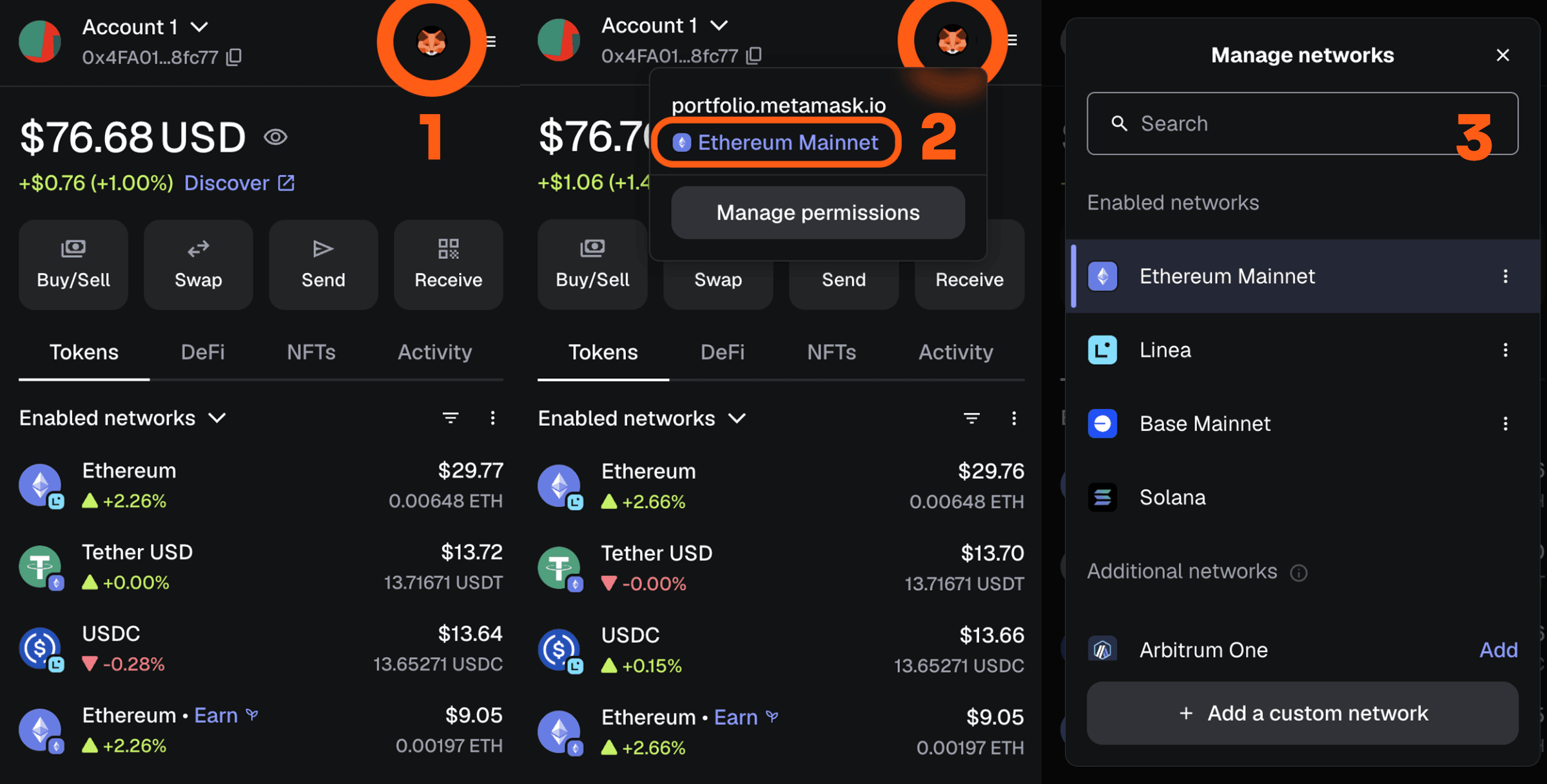
Multichain support simplifies portfolio management, but it does not automatically transfer assets between blockchains. Cross-chain transactions may still involve bridge fees, network fees and separate approvals. Learn more about multi-chain DeFi wallets. Here is how to switch a dapp’s network:
Is MetaMask Safe for DeFi?
MetaMask can be used safely for DeFi, but no software wallet can remove every risk. Its self-custodial model gives users control of their keys and transaction approvals, while also making them responsible for protecting their wallet and reviewing every request. MetaMask cannot reverse a transaction or recover a traditionally created wallet if its secret recovery phrase is permanently lost. Learn more about MetaMask security and crypto regulations.
What Security Features Does MetaMask Offer?
MetaMask includes several tools designed to reduce wallet and transaction risks:
These protections reduce risk but cannot guarantee that every dApp or smart contract is safe. Users should verify URLs, inspect token approvals, and review transaction details before signing. Explore more practices for secure crypto transactions.
How Does MetaMask Protect User Data and Privacy?
MetaMask keeps private keys and recovery phrases away from connected dApps. However, wallet addresses and transaction histories are recorded on public blockchains, so using a self-custodial wallet does not make on-chain activity anonymous.
Some MetaMask features also use online services. Depending on the user’s settings, information such as an IP address, public wallet address, transaction data, or app activity may be processed for analytics, token detection, and security alerts. Users can review these options, disable optional analytics, and adjust security or privacy settings within MetaMask.
Security alerts use on-chain analysis and threat intelligence from providers, including Blockaid. When enabled, transaction or signature requests may be sent for simulation to detect known threats, but users must still make the final approval decision.
MetaMask Benefits for DeFi
MetaMask offers more than crypto storage. Its broad dApp compatibility, developer tools, support resources, built-in swaps, and customizable features make it a practical gateway to DeFi. However, every dApp, Snap, or swap provider introduces its own permissions, fees, and risks, which users should review independently.
Active User Community and Developer Support
MetaMask’s widespread adoption means that many DeFi platforms support direct wallet connections. Users can also access official documentation, a community forum, developer resources, and an expanding directory of wallet extensions.
For developers, MetaMask provides tools for connecting dApps, requesting transaction signatures, and building new wallet experiences. Community developers can further extend the wallet through MetaMask Snaps. Users experiencing wallet errors can also consult Rango’s guide to troubleshooting common MetaMask challenges.
Community channels can be useful for general guidance, but users should never share their Secret Recovery Phrase or private keys with anyone claiming to provide support.
Conclusion
MetaMask is a practical choice for DeFi users who value self-custody, broad dApp compatibility and control over transaction approvals. Its multichain support, security alerts, hardware wallet integration and customizable Snaps help users access different parts of the decentralized finance ecosystem from one wallet.
Still, these features do not remove the risks associated with malicious dApps, unsafe approvals, exposed recovery phrases or smart-contract failures. MetaMask is most effective when its built-in protections are combined with consistent Web3 security practices, including verifying URLs, reviewing permissions and testing unfamiliar platforms with smaller transactions.
Resources
Frequently asked questions
Check out most commonly asked questions, addressed based on community needs. Can't find what you are looking for?
Contact us, our friendly support helps!
Is MetaMask safe for DeFi transactions?
MetaMask includes local key encryption, transaction simulations, security alerts and hardware-wallet support. However, no wallet can guarantee that every dApp or smart contract is safe. Users should verify URLs, review token approvals and check all transaction details before signing.
Which blockchain networks does MetaMask support?
MetaMask supports Ethereum and major EVM networks such as Base, Polygon, Arbitrum, Optimism and BNB Chain. It also supports Bitcoin, Solana and TRON natively, while other networks may be available through custom network settings or MetaMask Snaps.
How does MetaMask protect user privacy?
MetaMask keeps private keys and recovery phrases away from connected dApps. However, wallet addresses and transaction histories remain publicly visible on the blockchain, and some online features may process IP addresses or usage data. Users can manage optional analytics and other privacy controls in MetaMask’s settings.