Best Ethereum Layer 2 Networks in 2026

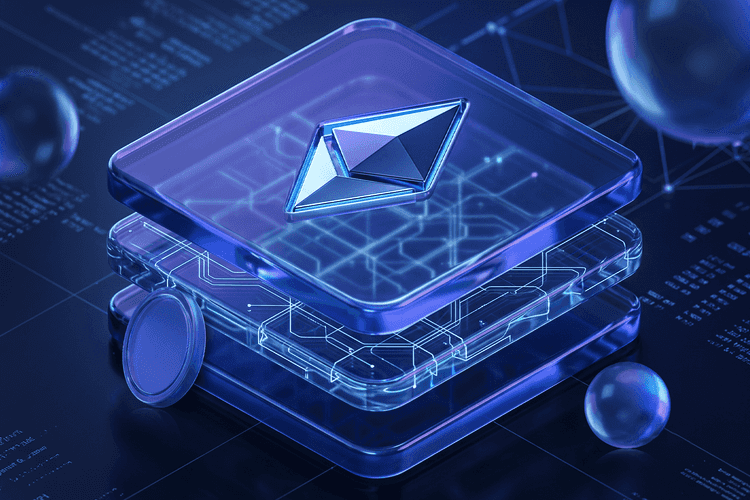
Ethereum continues to be the platform for a majority of decentralized finance (DeFi), NFTs, and Web3 projects. At the same time, network demand has remained high, leading to fluctuating transaction fees and confirmation times during periods of congestion. This has turned Ethereum Layer 2 networks into not just an upgrade but a core part of the ecosystem. There are many L2 blockchain solutions today that have lower fees, faster execution and support for a wide range of applications, while relying on Ethereum for security. However, there are some key differences in architecture, ecosystem maturity, decentralization, and user experience. Knowing the difference between the two can make choosing a network much easier. In the sections below, we will go over the best Ethereum layer 2s in 2026 and discuss where each excels.
What Is an Ethereum Layer 2 Network?
An Ethereum Layer 2 network is a blockchain that processes transactions outside Ethereum's main chain while ultimately settling transaction data on Ethereum. This design allows much of the computational workload to be moved away from Layer 1 without sacrificing the security provided by Ethereum.
Most Ethereum Layer 2 scaling solutions rely on either Optimistic Rollups (transactions are assumed valid unless challenged) or Zero-Knowledge Rollups (ZK Rollups), where cryptographic proofs are generated to verify transaction validity before final settlement. Both approaches significantly reduce gas costs while increasing transaction throughput. In practice, it has been observed that many decentralized exchanges, lending protocols, NFT marketplaces, and cross-chain bridges now support multiple Ethereum L2 networks simultaneously. Instead of remaining on Ethereum mainnet for every interaction, assets can be bridged to a Layer 2 blockchain where comparable applications are available at a fraction of the transaction cost.
Although Layer 2 Ethereum networks inherit much of Ethereum's security model, network liquidity, application availability, and bridge support continue to differ. These practical considerations often influence network selection more than raw transaction speed alone.
What are the best Ethereum Layer 2 Networks?
Arbitrum
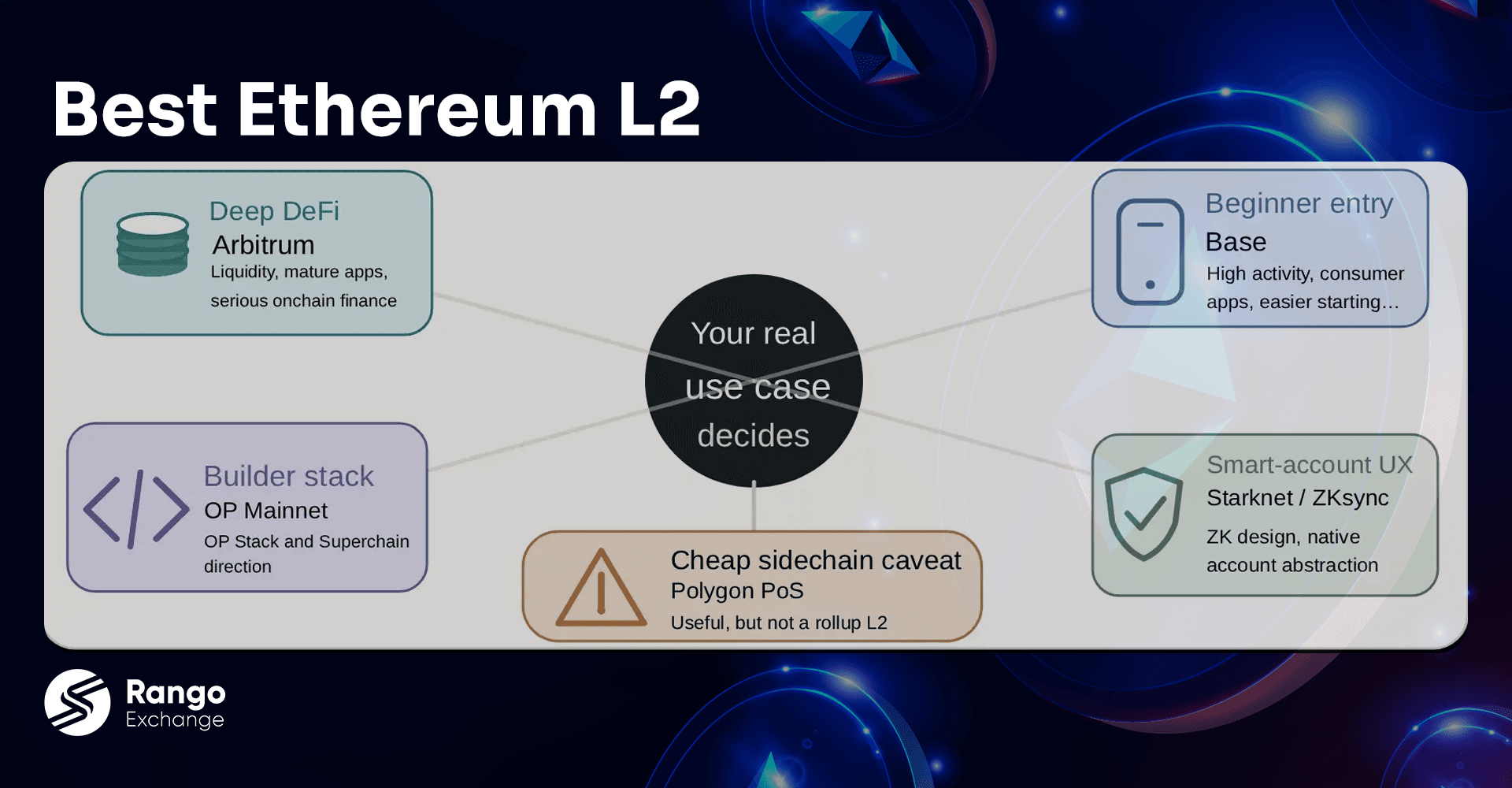
Arbitrum has continued to maintain one of the largest ecosystems among Ethereum Layer 2 networks. Built using Optimistic Rollup technology, it has attracted significant liquidity across decentralized exchanges, lending markets, perpetual trading platforms, and yield protocols. A broad selection of DeFi applications has been deployed on Arbitrum, making it particularly attractive for users who frequently interact with decentralized finance. High total value locked (TVL) has generally resulted in deeper liquidity and lower trading slippage than many competing Layer 2 blockchain networks.
Gas fees are typically reduced by more than 90% compared to Ethereum mainnet, while transaction confirmation usually occurs within seconds. Final settlement to Ethereum naturally requires additional time because of the Optimistic Rollup challenge period, although this rarely affects day-to-day trading activity.
A practical pattern has also emerged among bridge aggregators and cross-chain swap protocols. Stablecoin transfers from Ethereum to Arbitrum are frequently selected because liquidity availability remains consistently high.
For users focused on DeFi participation, lending, perpetual trading, and decentralized exchanges, Arbitrum continues to represent one of the most mature Ethereum L2 environments available.
Base
Base has experienced rapid ecosystem growth since its public launch and has become one of the fastest-growing Ethereum Layer 2 blockchain networks. Developed using the OP Stack, Base offers compatibility with existing Ethereum applications while emphasizing accessibility for mainstream users.
One notable characteristic is the strong onboarding experience. Wallet integration is generally straightforward, while many decentralized applications support Base immediately without requiring extensive configuration. This has lowered friction for users entering Web3 from centralized exchanges or custodial platforms. Transaction fees remain consistently low, often measuring only a few cents under typical network conditions. During moderate traffic, transaction confirmation is generally completed within several seconds, allowing decentralized trading and asset transfers to be performed efficiently.
Developer activity has also expanded considerably. New decentralized exchanges, consumer applications, gaming projects, and social protocols have been launched throughout 2025 and 2026, contributing to a rapidly growing application ecosystem. From an operational perspective, Base has become particularly attractive for smaller transactions where minimizing gas expenditure is important. However, liquidity depth across certain niche DeFi markets may still be lower than that observed on Arbitrum. For users seeking a modern Ethereum Layer 2 network with broad application support, low fees, and an expanding ecosystem, Base represents one of the strongest Layer 2 crypto options available in 2026.
Optimism
Optimism has established itself as one of the most mature Ethereum Layer 2 networks by prioritizing compatibility with the Ethereum ecosystem while supporting an expanding network of applications built on the OP Stack. As an Optimistic Rollup, transaction execution is performed off-chain before compressed data is submitted to Ethereum, resulting in substantially lower fees than those observed on the Ethereum network.
Beyond its own ecosystem, Optimism has influenced the broader Layer 2 blockchain landscape through the Superchaininitiative. This framework allows multiple OP Stack-based chains to share technology standards and interoperability, making cross-network development more consistent. As adoption continues to grow, assets and applications are expected to move more efficiently between participating chains.
For everyday usage, the experience is generally predictable. Wallet support is widespread, decentralized exchanges operate with low latency, and bridges are readily available through both native and third-party providers. Gas fees are typically measured in a few cents, although temporary increases may still occur during periods of exceptionally high demand. A practical trade-off should nevertheless be considered. While Optimism offers an excellent balance between ecosystem maturity and transaction costs, withdrawal times to Ethereum mainnet remain subject to the Optimistic Rollup challenge period unless liquidity providers or fast bridge services are used.
zkSync Era
zkSync Era represents a different approach to Ethereum Layer 2 scaling solutions by utilizing Zero-Knowledge Rollups (ZK Rollups). Instead of assuming transactions are valid until challenged, cryptographic validity proofs are generated before transactions are finalized. This approach enables faster settlement while preserving Ethereum's security guarantees. One advantage frequently highlighted is transaction finality. Because validity proofs are submitted directly to Ethereum, withdrawals generally require less waiting time than those associated with Optimistic Rollups. This characteristic may become increasingly valuable for users who frequently transfer assets between Ethereum L2 networks and the Ethereum network itself.
The developer ecosystem has also expanded steadily. Decentralized exchanges, lending protocols, payment applications, and NFT platforms have been introduced, although the overall application selection remains somewhat smaller than that available on Arbitrum or Base. Performance has generally remained strong under normal network conditions. Thousands of transactions can be processed efficiently while maintaining very low transaction costs. However, application compatibility occasionally differs because some advanced Ethereum Virtual Machine (EVM) features require additional implementation work within Zero-Knowledge architectures.
For users who prioritize cryptographic efficiency, faster withdrawals, and long-term scalability, zkSync Era remains one of the strongest Layer 2 crypto projects in 2026.
Starknet
Starknet also relies on Zero-Knowledge technology but follows a different technical architecture built around STARK proofs (Scalable Transparent Arguments of Knowledge). This design emphasizes scalability and security while supporting increasingly complex decentralized applications.
One distinguishing characteristic is its programming environment. Applications are primarily developed using Cairo rather than Solidity, introducing additional flexibility but also a steeper learning curve for developers already familiar with Ethereum. As a result, ecosystem growth has progressed steadily rather than explosively. From a user perspective, most interactions remain familiar. Wallet connections, decentralized exchanges, and token bridges function similarly to other Ethereum Layer 2 networks. Transaction fees remain very low, and network throughput continues to improve as infrastructure evolves.
Some operational differences should nevertheless be expected. Application availability remains smaller than that found on Arbitrum or Base, and liquidity may vary depending on the protocol being used. Before executing larger trades, liquidity depth and slippage should be reviewed carefully, particularly for less actively traded assets. As Zero-Knowledge technology continues to mature, Starknet is widely regarded as one of the most technically ambitious Ethereum Layer 2 scaling solutions available.
Ethereum Layer 2 Comparison
| Network | Technology | Typical Gas Fees | Ecosystem Maturity | Best For |
|---|---|---|---|---|
| Arbitrum | Optimistic Rollup | Very Low | Excellent | DeFi, perpetual trading, liquidity |
| Base | Optimistic Rollup (OP Stack) | Very Low | Rapidly Growing | Everyday users, payments, consumer apps |
| Optimism | Optimistic Rollup | Very Low | Mature | General-purpose Ethereum applications |
| zkSync Era | ZK Rollup | Extremely Low | Growing | Fast settlement, payments, scalability |
| Starknet | ZK Rollup (STARKs) | Extremely Low | Developing | Advanced scalability and emerging applications |
Rather than identifying a universally superior Ethereum Layer 2 network, the comparison suggests that each platform emphasizes different strengths. Ecosystem size, liquidity, application support, and bridge availability often influence the overall user experience more than theoretical throughput figures alone.
Which Ethereum Layer 2 Is Best for Your Needs?
The most suitable Layer 2 blockchain depends largely on the intended workflow rather than a single performance metric. Users primarily interacting with decentralized finance are often directed toward Arbitrum, where liquidity depth and protocol availability remain among the highest in the Ethereum ecosystem. Trading activity, lending markets, and perpetual exchanges are generally more mature, reducing slippage and improving capital efficiency. For newcomers to Web3 or users seeking a streamlined experience, Base frequently provides a simpler onboarding process. Wallet compatibility is broad, transaction costs remain consistently low, and consumer-focused applications continue to expand.
When interoperability within the OP Stack ecosystem is valued, Optimism offers an attractive balance between stability and ecosystem growth. Meanwhile, users prioritizing cryptographic efficiency and faster settlement may find zkSync Starknet more aligned with their requirements. Ultimately, no Ethereum L2 should be selected solely because it offers the lowest fees. Application availability, supported wallets, bridge compatibility, and protocol security are often more significant factors during long-term usage.
How to Use Ethereum Layer 2 Networks Safely?
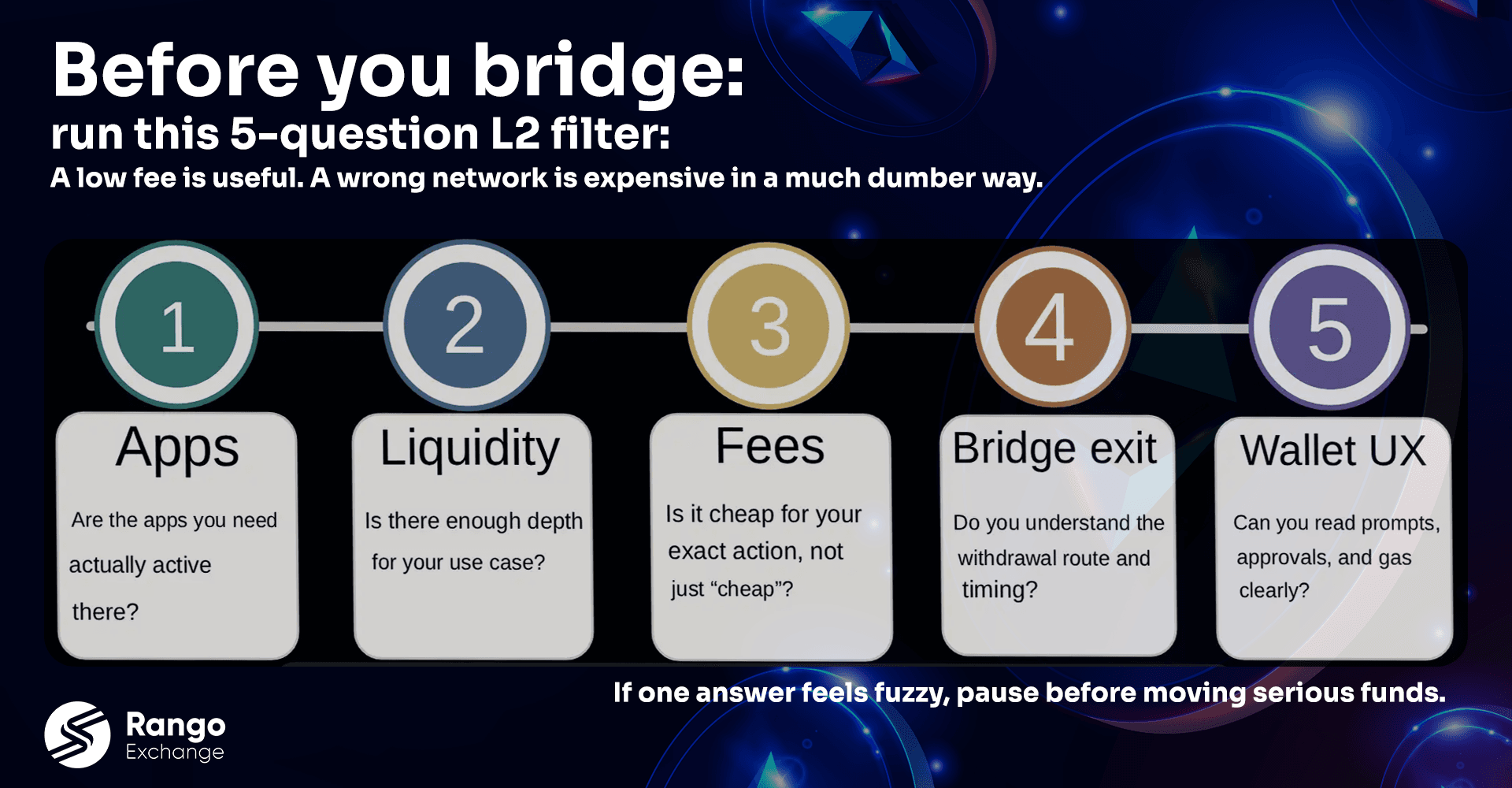
Although Ethereum Layer 2 networks inherit much of Ethereum's security, operational mistakes remain one of the most common sources of asset loss. A few disciplined habits can significantly reduce unnecessary risk. Before transferring substantial amounts, a small test transaction should be completed. Wallet addresses should be verified carefully, supported token standards should be confirmed, and bridge destination networks should be reviewed before approval is granted.
Only well-established bridges and decentralized applications should be used. Transaction previews should always be examined before signatures are approved, particularly when unlimited token approvals are requested. Whenever possible, hardware wallets should be used for higher-value holdings to isolate private keys from internet-connected devices. Under periods of network congestion, transactions may remain pending longer than expected. In such situations, repeated submissions should generally be avoided until the previous transaction status has been confirmed. Patience is often preferable to creating duplicate or conflicting transactions.
Choosing the Right Ethereum Layer 2
Selecting the right Ethereum Layer 2 network is best approached by considering the intended workflow rather than focusing on a single benchmark. While transaction fees often receive the most attention, they rarely determine the overall experience on their own. Ecosystem maturity, bridge availability, application support, wallet compatibility, and liquidity depth generally have a greater influence during long-term use.
For users whose activity centers on decentralized finance, Arbitrum continues to provide one of the broadest protocol selections and deepest liquidity pools. Users primarily seeking inexpensive transfers or consumer-focused applications may find Base more suitable due to its rapidly expanding ecosystem and straightforward onboarding. Optimism remains a balanced choice for general Ethereum compatibility, while zkSync Era and Starknet are particularly attractive for those interested in Zero-Knowledge technology and the future direction of Ethereum Layer 2 scaling solutions.
As the Ethereum ecosystem continues to evolve, it is increasingly common for users to interact with several Ethereum L2 networks rather than relying on only one. Cross-chain bridges and dex aggregators like Rango have made moving assets between Layer 2 blockchain ecosystems considerably easier, allowing applications to be selected based on their strengths instead of the network on which assets were originally held.
Conclusion
Ethereum Layer 2 networks have evolved from experimental scaling solutions into essential infrastructure for decentralized finance, digital assets, and Web3 applications. Lower transaction fees, faster confirmations, and expanding developer ecosystems have made Ethereum L2 networks the preferred environment for many everyday blockchain interactions.
Rather than searching for a universally superior Layer 2 blockchain, it is generally more effective to identify the network that aligns with the intended use case. Liquidity, application availability, bridge support, and ecosystem maturity should be evaluated alongside transaction costs. Practical safeguards remain equally important: small test transfers should be conducted before significant transactions, transaction previews should always be reviewed, and trusted bridges and wallets should be used whenever possible. These habits help reduce operational risk regardless of which Ethereum Layer 2 network is ultimately selected.
Resources
Frequently asked questions
Check out most commonly asked questions, addressed based on community needs. Can't find what you are looking for?
Contact us, our friendly support helps!
What is the best Ethereum Layer 2 network?
There is no single best Ethereum Layer 2 network for every use case. Arbitrum is widely regarded as the leading option for DeFi because of its liquidity and mature ecosystem. Base has become a strong choice for everyday users and consumer applications, while Optimism provides broad Ethereum compatibility through the OP Stack ecosystem. Users interested in Zero-Knowledge technology may prefer zkSync Era or Starknet, particularly as those ecosystems continue to expand.
Which Layer 2 has the lowest gas fees?
Most major Ethereum Layer 2 networks reduce gas costs dramatically compared with the Ethereum network. In typical conditions, Base, zkSync Era, Optimism, Starknet, and Arbitrum all process transactions for only a fraction of Ethereum mainnet fees, often below a few cents depending on network activity. However, gas fees should not be evaluated in isolation. Bridge costs, available liquidity, transaction success rates, and application support may have a greater effect on overall cost than the network fee itself.
What is the difference between Layer 2 and sidechains?
A Layer 2 blockchain settles transaction data on Ethereum and therefore benefits from Ethereum's security model. Technologies such as Optimistic Rollups and Zero-Knowledge Rollups are designed specifically for this purpose.
A sidechain, by contrast, operates with its own validator set and independent consensus mechanism. Although sidechains may offer low fees and high throughput, they generally rely on their own security assumptions rather than Ethereum itself. This distinction is often considered when evaluating security, decentralization, and long-term trust.