
What to Do if You Lose Access to Your Crypto Wallet

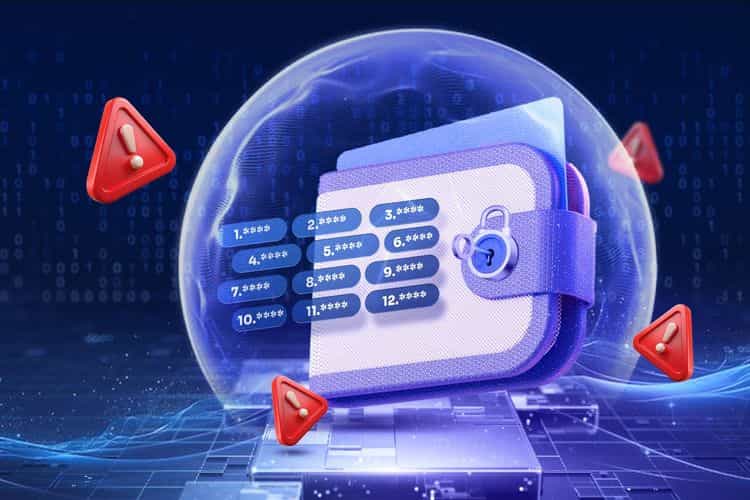
Losing access to a crypto wallet is often treated as a simple “password reset” problem, yet a different failure mode is usually encountered: the wallet is not an account, but a key-control system. When the key material is missing, access may be lost even though funds remain visible on-chain, and recovery options become constrained by custody model, device state, and backup hygiene. It is also worth noting that cross-chain usage (DEX aggregator swaps, on-chain bridges, allowance approvals) can add investigative surface area when access is interrupted mid-flow. The correct next action is frequently determined by small details that are easy to miss in the full article below.
Common reasons why users lose access to their crypto wallet
Loss of wallet access is rarely caused by a single mistake. In practice, it emerges from a combination of UX friction, misunderstood security models, and adversarial behavior. Unlike custodial systems, non-custodial wallets place full key ownership, and therefore full responsibility, on the user. This design maximizes sovereignty, but it also means that errors are often irreversible. The most common failure modes fall into two broad categories: self-inflicted key loss and external key compromise.
Forgotten passwords and lost seed phrases
In most non-custodial wallets, the password is not the key, it merely decrypts a private key stored locally on the device (encryption at rest). The seed phrase (mnemonic), typically 12–24 words derived from BIP-39, is the root of trust that deterministically regenerates all associated private keys.
This distinction is frequently misunderstood. Users assume a password reset flow exists, when in reality there is no on-chain or off-chain recovery mechanism for a lost seed phrase. If the phrase is missing, destroyed, or inaccessible, the wallet cannot be reconstructed, regardless of identity, device ownership, or transaction history.
Common crypto-native failure patterns include:
In short: password loss is recoverable; seed phrase loss is terminal.
Hacked accounts and compromised private keys
In this category, access loss is often a symptom, not the core problem. The underlying issue is loss of exclusive key control. Indicators typically appear on-chain: unexpected approvals, token drains, signature requests the user does not recall, or activity originating from unfamiliar devices or IPs.
Compromise vectors are well-known in crypto ecosystems:
Once a private key or seed phrase is exposed, revocation is impossible. Attackers do not need continued access, control is permanent until assets are moved to a new wallet. Even if the user can still log in, the wallet should be considered cryptographically unsafe.
From a security standpoint, this is not an account breach, it is key leakage, and the only remediation is key rotation via asset migration.
Immediate steps to take when you lose access to your crypto wallet
When wallet access is disrupted, time and sequencing matter. The first priority is not recovery at all costs, but risk containment: determining whether keys are merely inaccessible or potentially compromised. Many irreversible losses occur because users rush into unsafe recovery attempts, downloading fake wallets, entering seed phrases into unverified sites, or responding to unsolicited “support” messages. A disciplined, methodical approach significantly reduces downstream risk.
How to check if your wallet is still accessible on different devices
The initial diagnostic step is to establish whether the issue is device-scoped or key-scoped. Users should attempt access only on previously trusted environments, for example, an old phone, a known browser profile, or a hardware wallet where the wallet was confirmed to work in the past.
If the wallet opens successfully elsewhere, this confirms that:
In such cases, best practice is controlled recovery, not continued usage on the old device:
- Verify the seed phrase offline (never via screenshots or cloud sync)
- Confirm backups and derivation path correctness
- Perform a staged migration to a fresh wallet installation or new device
When access loss is due to deletion, reinstall, or device replacement, restoration typically occurs via the wallet’s “Import wallet / Restore from recovery phrase” flow. At this stage, accuracy is critical: incorrect word order, passphrase mismatch (BIP-39 optional passphrase), or wrong derivation path can falsely appear as permanent loss.
Importantly, no legitimate recovery process requires urgency or external interaction. Any prompt pushing speed or secrecy is a red flag.
Contacting wallet support and verifying your identity
Support escalation depends entirely on the custody model of the wallet. For custodial or semi-custodial systems (centralized exchanges, MPC wallets, social-login wallets), the provider may retain partial or full key control. In these cases, recovery workflows can include:
Here, “lost access” is treated as an account recovery problem, similar to traditional fintech systems.
For pure non-custodial wallets, the situation is fundamentally different. Support teams do not possess recovery material and cannot reconstruct private keys. Assistance is therefore limited to:
This asymmetry is structural, not a support failure. It reflects the core trade-off of self-custody: maximum control, minimum recourse. As a result, any serious “what to do if you lose crypto wallet” analysis must begin by identifying who controls the keys, the user, a provider, or a hybrid model.
Recovering access to your crypto wallet
1. Use your backup seed phrase or recovery key
If a seed phrase is available, the restore lost crypto wallet path is straightforward: a clean installation is performed, the phrase is imported in the correct order, and addresses are re-derived (sometimes requiring the right derivation path for the chain). It was noted in mainstream guidance that restoration after theft, damage, or loss is typically possible when the recovery seed is intact, while the opposite case is often irreversible.
2. Try MFA recovery options
If access was blocked by MFA loss (authenticator deletion, phone change), recovery codes and device re-enrollment become the critical artifacts. “2FA failure” is repeatedly described as a common lockout trigger, especially when backup codes were never stored offline. Where MFA is tied to a custodial login, provider recovery steps can sometimes restore access after identity checks have been satisfied.
3. Check if your wallet provider offers account recovery services
Specialized recovery services may exist in some ecosystems, but the trust model should be scrutinized. It has been emphasized that recovery offerings range from legitimate, identity-secured processes to outright scams, and that vetting should be performed before any wallet data is shared. In addition, it should be remembered that many losses are self-inflicted (lost keys, poor backups), meaning the recovery ceiling is often set by earlier operational choices rather than by later support responsiveness.
4. Use blockchain explorers to track your funds
When access to lost crypto funds are suspected, on-chain verification is treated as the fastest truth source. A transaction hash, wallet address, and token contract can be checked on blockchain explorers (Etherscan, BscScan, Solscan), and the last known state can be compared against expected activity. For cross-chain DEX aggregator flows, bridge router addresses, intermediate hop contracts, and wrapped-asset mints should be reviewed, because “missing funds” are sometimes found parked in a destination-chain token that was never added to the wallet UI.
5. Consider professional recovery services if all else fails
Professional recovery is best framed narrowly: password reconstruction, corrupted wallet file recovery, and controlled keyspace search may be attempted in some cases, but outcomes are not guaranteed. Reputable references have noted that some services can help recover lost passwords or corrupted wallet files, while simultaneously warning that legitimacy must be validated to avoid compounding the loss. The practical heuristic is that only partial-information cases (partial password, old encrypted file, known wallet format) are candidates; a fully lost seed phrase is usually a hard stop.
Quick mapping of common lockouts to likely recovery paths
| Lockout type | What is usually recoverable | What is often not recoverable |
|---|---|---|
| Device lost / app deleted | Wallet can often be restored with seed phrase import | Funds, if the seed phrase is also lost |
| Forgot wallet password | Access may be restored via seed phrase (new installation) | Local decryption, if neither password nor seed phrase is known |
| Suspected compromise | Remaining assets can often be moved to a fresh wallet | Confirmed on-chain transfers cannot be reversed under any circumstances. |
| 2FA loss (custodial login) | Access may be regained via backup codes or KYC verification | Recovery, if provider proof requirements cannot be met |
How to prevent losing access to your crypto wallet in the future
Preventing wallet lockout is less about advanced security tools and more about operational consistency. Most irreversible losses occur during routine events, device upgrades, app reinstalls, travel, or moments of urgency, when recovery assumptions are tested for the first time. Effective prevention therefore focuses on ensuring that key material remains accessible, verifiable, and resilient over time.
Best practices for securely storing seed phrases and passwords
A seed phrase should be treated as a bearer asset, not a recoverable credential. Whoever controls it controls the wallet, and once it is lost, there is no fallback mechanism. Wallet software, blockchains, and support teams cannot regenerate or reset a missing seed phrase.
For this reason, storage should be offline, redundant, and designed to survive environmental damage. Many users rely on written or metal backups stored in secure, physically separate locations. Convenience-driven practices, such as screenshots, cloud notes, or email drafts, introduce silent single points of failure and should be avoided.
An often overlooked but highly effective practice is a one-time recovery test. Importing the seed phrase on a secondary device, confirming the correct addresses, and then wiping the device immediately proves that the backup works before it is ever needed under stress. This small step prevents false confidence, which is a common precursor to permanent loss. Passwords, in contrast, protect local access rather than ownership. They can usually be replaced and should never be treated as substitutes for recovery material.
Using hardware wallets and backup options for extra security
Hardware wallets reduce online exposure by keeping signing operations off general-purpose devices. This significantly lowers the risk of malware-driven key theft, but it does not remove recovery responsibility. The recovery seed remains the single source of truth, regardless of where keys are stored.
In practice, many users adopt a layered setup: a hot wallet for frequent interactions such as DEX aggregator swaps, and a hardware-backed cold wallet for long-term holdings. This separation limits the impact of mistakes and compromises. Before moving large balances, small test transactions are commonly used to confirm addresses, signing flows, and network assumptions. The objective is not perfect security, which is unrealistic in an adversarial environment, but controlled failure modes, ensuring that a single error does not result in total, irreversible loss.
What to do if your crypto wallet is hacked or stolen
When a wallet compromise is suspected, the situation should be treated as a key exposure event, not a temporary access issue. Speed matters, but so does discipline. Rushed actions، especially interacting with unknown links or “support” messages، often worsen the damage. The priority is containment, not recovery.
Immediate actions to protect your remaining assets
The first step is isolation. Disconnect the affected device from the internet and assume it is unsafe. A new wallet should be created on a known-clean device, and remaining assets moved using a staged approach: a small test transfer followed by the primary migration.
Where applicable, token approvals should be revoked, as compromised wallets often retain active allowances that enable repeated drains even after balances are restored. Any unsolicited support outreach via direct messages should be treated as malicious by default; legitimate recovery does not happen in private DMs or under time pressure.
How to report and track stolen funds on the blockchain
After containment, stolen funds can be tracked by following the attacker address on a block explorer and monitoring subsequent movements. This is especially important when funds pass through bridges, mixers, or identifiable centralized exchange deposit addresses.
If an exchange endpoint is identified, reports can be filed promptly, and incident details may also be shared with local authorities. Expectations should remain realistic: confirmed on-chain transfers are generally irreversible. As a result, early detection and rapid containment are far more effective than attempting post-hoc recovery.
Summary
It was observed that the crypto wallet recovery process is usually determined by one question: whether the recovery seed (or an equivalent recovery key) still exists and can be imported safely. When it does, access can often be restored even after device loss; when it does not, access may be lost permanently despite funds remaining visible on-chain. Investigation is best anchored in explorers, where balances, approvals, and transfers can be validated without relying on wallet UI state. Two compact heuristics tend to hold: small, reversible tests are favored before large, irreversible actions, and recovery material should only be entered into the wallet app after the download source has been verified.
Resources
Frequently asked questions
Check out most commonly asked questions, addressed based on community needs. Can't find what you are looking for?
Contact us, our friendly support helps!
What happens if I lose access to my crypto wallet?
In most non-custodial designs, funds remain on-chain while control is lost when private keys or the seed phrase are unavailable. Recovery is then constrained to restoring from an existing backup or reconstructing access from partial local artifacts, when present.
What happens if you lose your crypto wallet password?
If the password only protects local key storage, access may be regained by restoring from the seed phrase on a fresh install. If neither password nor seed phrase is available, recovery is often not possible.
Can I recover my wallet without a recovery phrase?
In general, recovery without the recovery phrase is limited to special cases (custodial account recovery, cloud backups, or professional password/file recovery attempts). No method should be trusted if the process requires a seed phrase to be “verified” on a website or via DMs.