What Is a Crypto Wallet Address and How Does It Work?


Crypto wallet addresses are commonly encountered during transfers, decentralized finance interactions, and account setup on exchanges. It may be assumed that these identifiers function similarly to bank account numbers, yet notable differences in generation, security, and irreversibility are observed. As on-chain transactions and cross-chain usage have increased, understanding the concept of a crypto wallet address has become necessary for minimizing operational errors and maintaining custody control. The sections below outline the formation, usage, and security of a crypto wallet address.
What Is a Crypto Wallet Address?
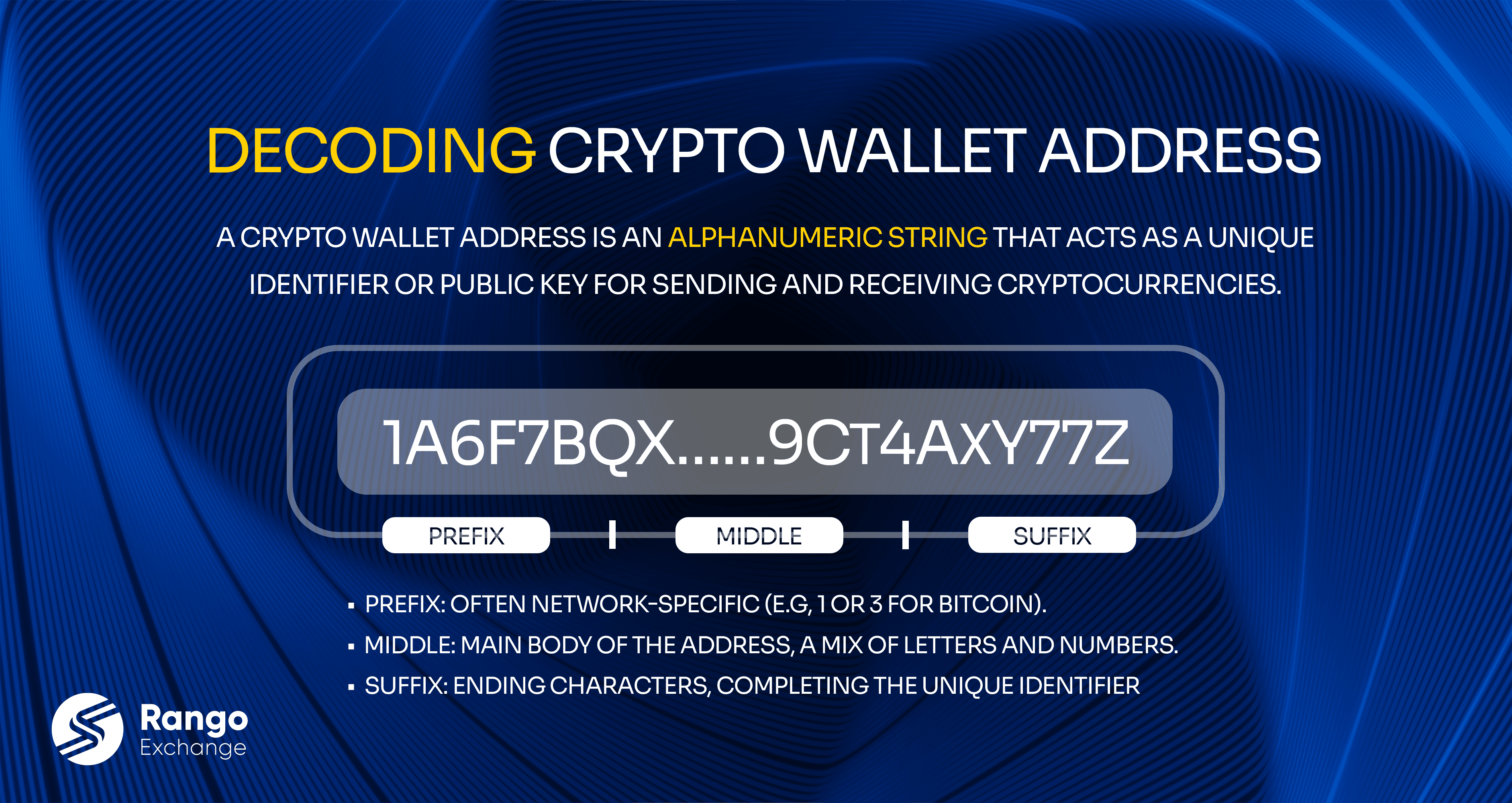
The crypto wallet address is a public identifier you use to receive digital assets on a blockchain. It is derived from a cryptographic public key and is generated through hashing and encoding processes to become a string of alphanumeric characters or a QR code representation. It is normally referred to as the blockchain wallet address or the wallet address.
Every crypto wallet address is associated with a corresponding private key to authorize transactions. Although the crypto wallet address can be shared publicly, the corresponding private key should remain a secret. This is a fundamental concept of blockchain security.
Why Are Crypto Wallet Addresses Important?
Ownership of Digital Assets
Ownership of crypto assets is determined by control of the private key corresponding to a wallet address. Unlike custodial systems, control is not mediated by intermediaries. As a result, asset recovery is often not possible if keys are lost, which has been documented across multiple user reports and platform disclosures.
Secure Transactions
Wallet addresses are necessary for verifiable transactions. Transactions are signed using a private key and verified through nodes on the network, reducing counterparty risk. Cases of address spoofing and clipboard hijacking malware have been noted, implying that verification of addresses is essential.
Functionality
Addresses are necessary for interacting with decentralized applications, staking protocols, and cross-chain bridges. In multi-chain environments, separate addresses may be necessary for each chain, even with the same key pair.
Compatibility
Address formats differ across chains and standards, affecting compatibility with wallets and services. For instance, using the Ethereum address format to send Bitcoin is not supported and may lead to permanent loss of funds. This is viewed as a major operational risk.
How a Crypto Wallet Address Works?
A crypto wallet address is created from a key pair using elliptic curve cryptography. The public key is hashed and encoded into a short, user-facing address. The private key acts as the signing authority. During the transfer of crypto assets, the sender indicates the address of the receiver. Nodes validate the signature and record the transaction in a block. The transfer is then relayed to the network.
It was noticed that the time to confirm varied between networks and fee situations. Delays in confirmation are also experienced in congested networks. A micro-scenario is used to explain the process. A small test transfer is done before the main transfer. The confirmation of the transfer is monitored in a block explorer. This method is used to avoid irreversible errors in the main transfer.
Different Types of Crypto Wallet Addresses
Bitcoin Wallet Addresses
Legacy addresses typically start with “1” and are encoded using Base58. These were the original Bitcoin address format and remain supported, though higher fees may be observed due to larger transaction sizes.
P2SH (Pay-to-Script-Hash) addresses often start with “3” and are used for multisig and script-based transactions. Compatibility with older wallets is maintained, but efficiency improvements are limited.
SegWit addresses start with “bc1” and reduce transaction size and fees. Error detection is improved through checksum encoding, and lower fees were recorded in comparative fee simulations.
Taproot addresses (bc1p) enable enhanced privacy and scripting capabilities. Adoption is still increasing, and compatibility may vary across platforms.
Ethereum Wallet Addresses
Ethereum addresses are 42-character hexadecimal strings starting with “0x.” The same address format is used across Ethereum-compatible networks such as Polygon, Base, and Arbitrum. It was noted that the same address can represent accounts on multiple chains, although balances are network-specific.
Other Types of Crypto Addresses
Other blockchains use distinct formats, such as Solana’s base58 addresses or Cosmos bech32 prefixes. Cross-chain bridges and aggregators rely on network-specific address validation to prevent misrouting.
How to Create and Use a Crypto Wallet Address
Wallets may be categorized as custodial, non-custodial, hardware, or software. Hardware wallets were observed to provide offline key storage, while software wallets prioritize accessibility.
Wallet applications generate key pairs during setup. A seed phrase (a human-readable backup) is produced and must be recorded securely. Loss of this phrase typically results in irreversible loss of funds.
Configuration includes network selection, passphrase creation, and address display. Many wallets surface a QR code and textual address to reduce transcription errors.
Crypto can be purchased on exchanges and transferred to the wallet address. Transfer crypto to wallet address workflows require selecting the correct network and verifying address format.
Addresses are used for DeFi interactions, NFT transfers, and cross-chain swaps. Transaction previews and simulation tools may be provided by wallets to estimate fees and outcomes.
Safety Tips for Using Crypto Wallet Addresses
Double-Check Crypto Wallet Addresses Before Signing
Always verify the address before sending anything from the wallet. You can visually inspect the address and utilize any checksum functionality provided by the wallet, if available. Many wallets will alert you if unusual patterns, such as repeated characters or common typos, are present in the address. Human-readable names, such as ENS or similar domain names(Ethereum Name Service), can help prevent errors, but it is important to ensure that the domain actually points to the correct address and does not represent a phishing scam. For additional security, store a secure list of your most-used addresses in a password manager.
Send a Test Transaction
Before sending a large amount of crypto, send a small test transfer. It might feel unnecessary, but it’s one of the simplest ways to avoid costly errors. Many users and teams treat test transactions as a standard safety step because it dramatically reduces the risk of sending funds to the wrong address.
Use a Web3 Domain for Easier Transfers
Web3 domains, such as ENS, let you send crypto to a readable name instead of a long string of characters. This can significantly reduce copy-paste mistakes. That said, always double-check that the domain resolves to the correct address, since phishing domains can look convincing.
Choose a Reputable Wallet
However, not all wallets are created equal. Well-known wallets with open-source code, security audits, and hardware wallet support are more secure. Regular updates, phishing warnings, and transaction previews are additional security layers. In some cases, it’s a good idea to use a software wallet in combination with a hardware wallet.
Conclusion
Crypto wallet addresses are a form of cryptographic identifier for receiving and managing digital assets. Their structure, generation, and validation are based on blockchain principles and not intermediaries.
The text describes different address formats, compatibility, and security, and highlights how misconfigurations and human errors are the main risk factors. The text suggests simple and practical steps, which include a test transaction, address verification, and secure backup storage, to be taken before making any irreversible transactions. When looking at the broader picture, address literacy is described as a fundamental concept, for self-custody and decentralized system interaction, and careful procedural discipline is favored over speed in high-value contexts.
Resources
Frequently asked questions
Check out most commonly asked questions, addressed based on community needs. Can't find what you are looking for?
Contact us, our friendly support helps!
How to get a crypto wallet address?
A crypto wallet address is a public identifier you share with others to receive cryptocurrency, similar to an email address or bank account number. It’s derived from your public key and is safe to share publicly. A private key, on the other hand, is a secret cryptographic code that proves ownership of the funds in that wallet. It’s what allows you to sign transactions and move your crypto. Anyone who has access to the private key can control the assets, which is why it must be kept strictly confidential. In simple terms: the wallet address is for receiving funds, and the private key is for controlling them.
How to get a crypto wallet address?
A crypto wallet address is automatically generated when you create a new wallet. During setup, the wallet software or hardware device creates a cryptographic key pair: a private key and a corresponding public key. The wallet address is then derived from the public key using blockchain-specific algorithms. You don’t need to manually generate the address, modern wallets handle this process securely in the background. Once created, the address can be used immediately to receive cryptocurrency.
Can a crypto wallet address be tracked or changed?
Yes, crypto wallet addresses can be tracked. Most blockchains are public ledgers, meaning anyone can view transactions using blockchain explorers. While addresses don’t directly reveal your identity, patterns of activity can sometimes be analyzed and linked to individuals or organizations, especially if personal information is shared elsewhere. As for changing an address, existing wallet addresses cannot be modified once they are created. However, many wallets allow you to generate new addresses for privacy or organizational purposes. This is common in modern wallets that use hierarchical deterministic (HD) technology, where multiple addresses are derived from a single recovery phrase.