
How Bitcoin became legal tender in El salvador

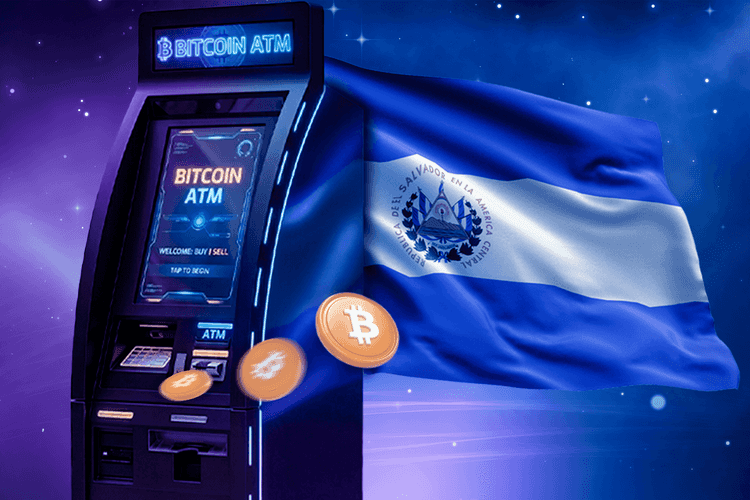
In 2021, a big change in monetary policy happened when El Salvador made Bitcoin legal tender. It was possible that people thought this move would only be a test or a symbol at the time. But the implementation was quickly made official, and the first signs of economic effects that could be measured started to show up. The subject remains pertinent as the discourse surrounding sovereign digital asset adoption persists. The mechanisms, motivations, and outcomes evident in El Salvador constitute a definitive case that necessitates thorough examination in its entirety.
Background: El Salvador's economy before bitcoin
Reliance on the US dollar and remittances
Prior to Bitcoin’s adoption, it was observed that El Salvador operated under a dollarized system, where the United States dollar had been used as legal tender since 2001. This arrangement reduced exchange-rate volatility but limited monetary policy autonomy. Inflation control was effectively outsourced, while domestic tools such as currency devaluation were unavailable.
Remittances (funds sent by citizens working abroad) were recorded as a major economic input, accounting for approximately 20% of GDP in some years, according to data summarized by sources such as the World Bank. Transaction fees associated with these transfers were often measured between 5% and 10%, depending on corridor and service provider. A recurring inefficiency was noted in cross-border transfers, where settlement delays and fee extraction reduced net inflows.
A micro-scenario illustrates this: a small remittance of $200 was sent via a traditional provider, and approximately $10–$15 was deducted in fees. Settlement was completed within 1–3 business days. This pattern was repeated across millions of transactions annually.
The country’s search for financial independence
It was inferred that structural constraints, such as dependence on external monetary policy and high remittance costs, contributed to a search for alternative financial mechanisms. Financial inclusion was also limited; estimates suggested that around 70% of adults lacked access to traditional banking services (PwC report on El Salvador’s Bitcoin Law).
Digital infrastructure, however, has been expanding. Mobile phone penetration exceeded 140% (multiple SIM usage), and internet access was steadily increasing. These conditions created a scenario where mobile-based financial tools could be deployed more easily than traditional banking expansion. It was under these constraints that decentralized digital assets, particularly Bitcoin, were evaluated as potential tools for reducing friction in payments and improving financial access.
Why El Salvador chose bitcoin as legal tender
Nayib Bukele made the official announcement that El Salvador would use Bitcoin in June 2021. According to an analysis by Forbes of El Salvador's economic history, Bitcoin could lower the cost of sending money, make it easier for people to get access to financial services, and bring in foreign investment.
People thought that a few things about Bitcoin were important:
However, trade-offs were immediately apparent. Price volatility (frequent fluctuations exceeding 5% daily) introduced uncertainty in pricing and accounting. Transaction throughput (limited number of transactions per second on-chain) required scaling solutions such as the Lightning Network (a layer-2 protocol enabling faster payments).
A notable behavior was observed during early wallet testing: small payments were executed via Lightning with near-instant settlement, while on-chain transactions required confirmation times of 10–60 minutes depending on network congestion.
Timeline: How bitcoin became legal tender in el salvador
The transition from proposal to implementation was executed rapidly. Key milestones are summarized below:
| Date | Event |
|---|---|
| June 5, 2021 | Bitcoin Law introduced in Legislative Assembly |
| June 9, 2021 | Law passed with majority approval |
| September 7, 2021 | Bitcoin officially becomes legal tender |
| September 7, 2021 | Government launches Chivo wallet (state-backed app) |
It was mandated that Bitcoin be accepted as payment by businesses, although conversion to USD was supported via government infrastructure. The Chivo wallet provided automatic conversion, reducing exposure to volatility for merchants.
A micro-scenario can be considered: a merchant received a $10 payment in Bitcoin. The system converted it instantly to USD using a liquidity pool. Exchange risk was absorbed by the system rather than the merchant. This reduced friction but introduced dependency on state-managed infrastructure.
Launch of the Chivo wallet and payment infrastructure
The rollout of the Chivo wallet was structured as the primary access layer for Bitcoin transactions in El Salvador. The application enabled both Bitcoin and United States dollar payments, with automatic conversion supported through state-managed liquidity pools (PwC report). Integration with the Lightning Network (a layer-2 protocol enabling fast, low-cost transactions) allowed near-instant settlement for small payments.
Early usage patterns indicated rapid onboarding, partly driven by a $30 Bitcoin incentive. However, technical instability was observed under peak demand, including identity verification delays and temporary outages. In one typical interaction, a Lightning payment was confirmed within seconds, while an on-chain transaction required extended confirmation time due to congestion.
A trade-off was established between usability and decentralization. While volatility exposure was reduced through automatic USD conversion, reliance on centralized infrastructure increased. It was inferred that accessibility was prioritized over strict adherence to decentralized principles during initial deployment.
Impact and controversy surrounding bitcoin adoption
After the implementation, the results were mixed. The good news is that tourism seems to have gone up, and foreign interest in investing in cryptocurrencies has also been reported (BBC coverage of Bitcoin adoption). Tests with remittances showed that using Lightning-based transfers could cut fees by a large amount. But the rate of adoption among the people was still uneven. Surveys showed that a lot of people still preferred to do business in USD.
There were a few risks that were found:
Unexpected behavior was also encountered. Under conditions of high network congestion, transaction fees increased sharply, reducing the cost advantage of on-chain Bitcoin transfers. As a result, reliance on layer-2 solutions became essential rather than optional.
Adoption rates and real-world usage
Post-launch data suggests that adoption was uneven, with a clear distinction between wallet downloads and sustained usage. While millions of Chivo wallets were registered, surveys indicated that many users reverted to the United States dollar for routine transactions (BBC, academic studies). Initial engagement appeared strongly influenced by incentive distribution rather than long-term behavioral change.
Bitcoin usage was more consistently observed in tourism and crypto-oriented businesses. Remittance transfers showed measurable fee reductions when processed via Lightning, particularly for small-value transactions. A test transfer of $100, for example, was completed with minimal fees compared to traditional remittance channels, although usability barriers remained for less experienced users.
A hybrid usage pattern emerged. Bitcoin was used selectively where cost or speed advantages were clear, while USD remained dominant for price stability. This suggests that dual-currency systems may function as transitional models rather than full replacements.
Criticism from international institutions
The International Monetary Fund and the World Bank, among others, were worried about financial stability and regulatory risk. The price swings of Bitcoin were seen as a major problem, especially when it came to government-held reserves and fiscal exposure. There was also a lot of talk about regulatory uncertainty. The fact that Bitcoin transactions were pseudonymous made it harder for anti-money laundering (AML) and counter-terrorism financing (CTF) frameworks to work. Also, using centralised infrastructure like the Chivo wallet could have caused operational problems.
Another worry was technical reliability. Service interruptions or system outages could temporarily slow down transaction processing, especially when there is a lot of demand. These risks weren't only present in El Salvador, but the fact that Bitcoin was legal tender made them worse.
Overall, the policy was viewed as a large-scale financial experiment. While benefits in payment efficiency were observed, long-term macroeconomic effects remain uncertain and require further evaluation.
What’s next: lessons from el salvador’s bitcoin experiment
Stepping back, several patterns can be identified. First, it appears that infrastructure readiness plays a critical role. Bitcoin’s base layer alone was insufficient for mass adoption; scaling solutions were required to maintain usability. Second, a trade-off between sovereignty and stability was observed. While monetary independence may have been increased, price stability was reduced. This trade-off may not be acceptable in all economic contexts.
Third, procedural habits emerged as important safeguards. Small test transactions were often conducted before larger transfers. Wallet backups were created and verified. QR codes were double-checked prior to payment confirmation. It was also noted that hybrid systems, where Bitcoin and fiat coexist, may provide a transitional pathway rather than a full replacement model.
Summary
The adoption of Bitcoin as legal tender in El Salvador was driven by structural economic constraints, including reliance on the United States dollar and high remittance costs. A rapid legislative process enabled implementation, supported by state-backed infrastructure such as the Chivo wallet. Mixed outcomes were observed, with efficiency gains in cross-border payments and financial access, alongside persistent challenges related to volatility, technical reliability, and uneven adoption. The case suggests that digital asset integration at a national level depends heavily on infrastructure readiness, user trust, and the balance between monetary sovereignty and economic stability. Hybrid systems, rather than full replacements, may represent a more viable transitional model.
Resources
Frequently asked questions
Check out most commonly asked questions, addressed based on community needs. Can't find what you are looking for?
Contact us, our friendly support helps!
Why did El Salvador make Bitcoin legal tender?
El Salvador adopted Bitcoin as legal tender in 2021 as part of a broader economic and financial strategy. The government argued that it could significantly reduce the cost of remittances, which make up a large share of the country’s GDP and are often subject to high fees through traditional money transfer services. It also aimed to improve financial inclusion, since a large portion of the population was unbanked or underbanked and could potentially access financial services through mobile crypto wallets. In addition, the policy was designed to attract foreign investment and position El Salvador as an early adopter in the global cryptocurrency space, potentially encouraging tourism, innovation, and fintech development.
Is Bitcoin widely used in El Salvador today?
Bitcoin adoption in El Salvador remains limited and uneven. While the government introduced infrastructure such as the Chivo wallet, Bitcoin ATMs, and incentives like sign-up bonuses, real-world usage has not reached widespread levels. Many businesses that initially accepted Bitcoin later reverted to US dollar transactions due to volatility concerns and low customer demand. As a result, the US dollar continues to dominate everyday economic activity, with Bitcoin usage generally confined to niche transactions, remittances, and crypto-enthusiast communities rather than becoming a mainstream medium of exchange.
What risks were identified after adoption?
Several risks became evident following Bitcoin’s adoption. The most significant is price volatility, which makes it difficult to use Bitcoin as a stable medium of exchange or store of value for everyday citizens. There were also technical and operational challenges, particularly with the rollout and reliability of government-backed systems like the Chivo wallet, which faced user complaints and functionality issues. On a macro level, concerns were raised by international financial institutions about fiscal stability, debt risk, and compliance with global regulatory standards. Additionally, uncertainty around long-term regulatory frameworks and limited public trust contributed to ongoing debate about the policy’s effectiveness and sustainability.