
Celo is Here 🔥
Introduction:
In the ever-evolving landscape of blockchain technology, integration is key to unlocking new potentials and expanding the horizons of existing platforms. One such recent Rango integration that has sparked interest is Celo, a blockchain designed for financial inclusion. In this blog post, we will delve into the integration of Celo into Rango Exchange, exploring its technical aspects, advantages, future prospects, and why this integration is a significant step forward.
What is Celo?
Celo is a modern, innovative, non-for-profit platform which encourages the adoption of digital money along with its use. It is an open-source EVM-compatible blockchain that enables the use of smart contracts to develop decentralized applications (DApps) which will use payment solutions as well as Celo assets. Celo incorporates innovations such as Zero-Knowledge proofs for its privacy, a lightweight identity protocol and a stablecoin mechanism to facilitate fast and secure transactions at minimal cost. The interactive interface was built to streamline the most popular user activities. As such, anyone can easily send cryptocurrency to any mobile number using the platform. Its focus on mobile accessibility and scalability makes it a promising contender in decentralized finance (DeFi).
Celo Technical Analysis:
- Mobile-first design
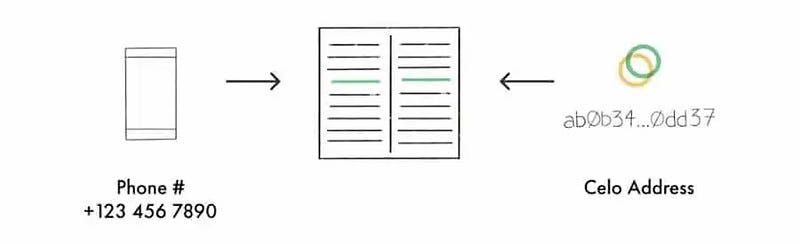
The technical underpinnings of Celo are robust and geared towards accessibility and usability. Its consensus mechanism, utilizing a modified proof-of-stake algorithm called Proof of Stake with Identity (PoSI), ensures both security and inclusivity by allowing users to participate in consensus with their phone numbers encrypted by Address Based Encryption protocol. Rather than using complex, long strings of letters and numbers as blockchain addresses, users of Celo are able to send and receive cryptocurrencies using their phone number. Celo runs a mobile number confirmation algorithm that connects a unique subscriber number to a wallet application, subsequently turning it into a public key. To make use of mobile phones, the Celo protocol was created to be lightweight and fast. And with over 6 billion mobile devices globally, it was also made to be scalable.
- Light accessibility
The Celo POS-mechanism network consists of the following three-level node structure:
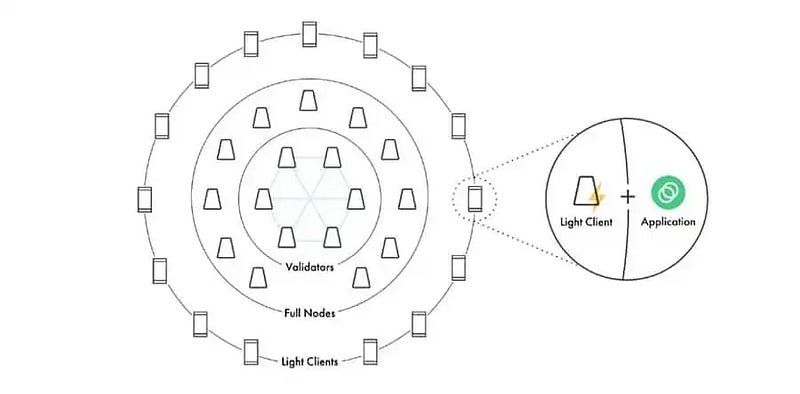
To ensure access and usability of the Celo app, developers created ultralight clients and a special blockchain structure to ensure quick synchronization while using limited power. Using mobile phone numbers as addresses allowed the team to develop a blockchain with far lower resource usage when compared with many modern blockchain solutions. This low resource design is key for increasing usage in areas where resources are scarce. When a light node has a transaction, they attach the small gateway fee to it and when it is passed along to the full node, this gateway fee is the incentive for the full node to pass the transaction to the validators. Light clients are able to choose the specific full node they wish to service them and this can be based on location, cost, reliability and other factors to optimize cost and quality of service.
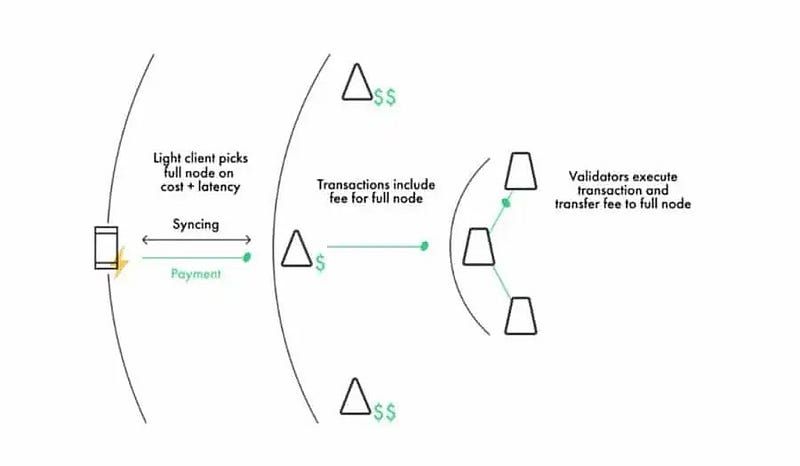
Celo nodes benefit from “gateway fees” in the network. The nodes are also considered gateways to the network and they forward transactions and requests from the light nodes to the validators. In a network like Celo, where most of the nodes will be light or ultralight mobile wallet nodes, it is important to have a robust level of full nodes in place to service the light nodes. The good news is there are no costs for running a node other than the electricity used to run the machine the node is installed on. On the other hand Celo is constantly working on making being a validator more affordable.
Validators are the most powerful components in the network. They are responsible for protocol changes, providing security audits, and supplying the hardware and software necessary to keep the network running. Validators are compensated for the role they perform in the network. Any validators that don’t act in the best interests of the network can be penalized economically. Plus, since the validators are elected by Celo holders, any validator that doesn’t act in the best interests of the community can be replaced by the votes of the community.
- Stablecoin stability
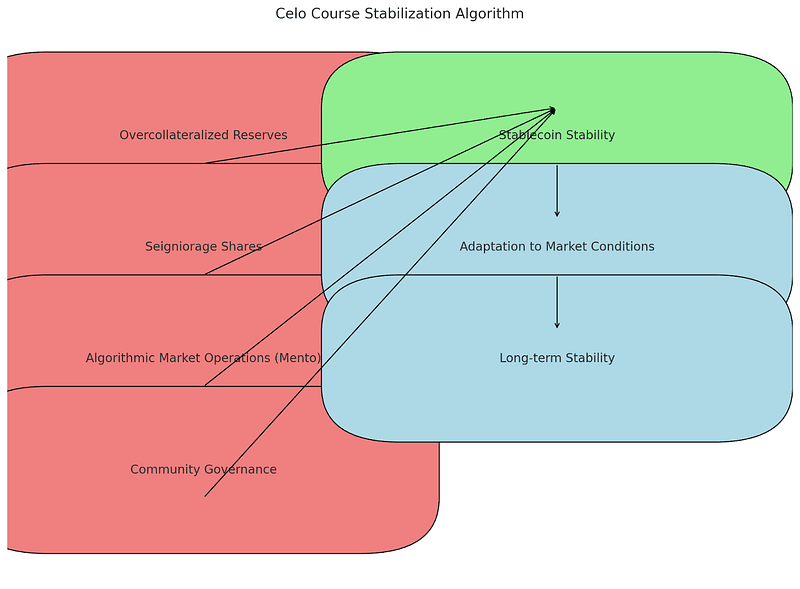
Celo stands out as a leading hub for stablecoins due to its unique architecture and stabilization mechanisms that ensure stability, scalability, and financial inclusion. At its core, the CELO token(fixed supply, 1,000,000,000 tokens) and cUSD stablecoin work together through theMento mechanism, allowing dynamic supply adjustments to maintain the cUSD peg to the US dollar. This system is backed by a diversified reserve of cryptocurrencies, providing robust collateral. Additionally, Celo’s focus on mobile accessibility enables seamless use of stablecoins globally, even in regions with limited banking infrastructure, making it a powerful platform for inclusive and reliable financial transactions.
- Financial credibility check
A notable addition to the Celo platform is the decentralized algorithm EigenTrust, which functions similarly to a credit score by measuring reputation. With EigenTrust, an account’s reputation score is determined by the number of other accounts that trust it, weighted by their respective reputation scores. Developed by Sep Kamvar, one of Celo’s founders, in 2002 for Google, EigenTrust was a key component of the Google PageRank algorithm.
Celo integration
Celo’s mobile-first design and light-client architecture make it incredibly user-friendly, while its EVM compatibility and innovative upgrades ensure easy migration for developers. The Celo DappKit, a collection of free tools and comprehensive documentation, streamlines Dapp development, allowing developers to quickly create immersive applications. With Celo’s flexible programmability, developers can seamlessly integrate network features like stablecoins (cUSD, cEUR) into their Dapps without needing to learn new coding languages.
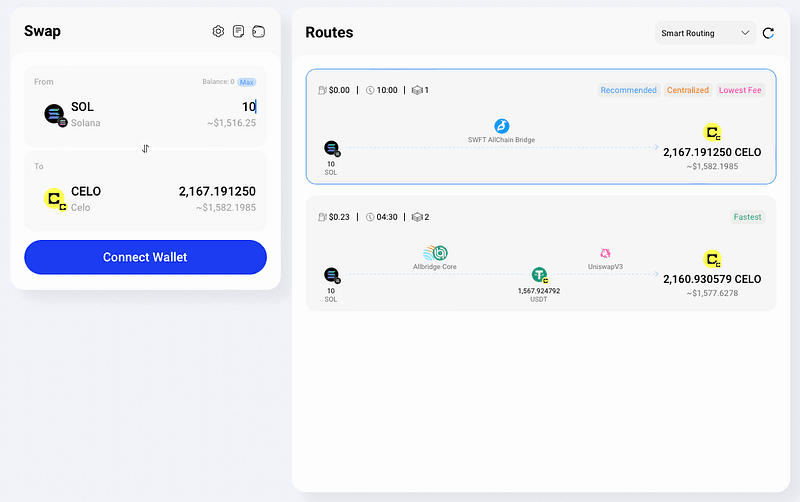
Additionally, Celo supports the creation of new stable assets and multi-reserve assets, enhancing its versatility. Therefore, its cross-chain interoperability is more crucial to enable its easy access across the DeFi ecosystem. Rango leverages Celo’s technology to offer a seamless and cost-effective cross-chain and on-chain swap experience, aligning with its vision of providing the best user experience. This integration taps into a diverse pool of assets and liquidity, showcasing Celo’s capability to enhance both user and developer experiences in the blockchain space.
🌉 Sattelite, Allbridge and SWFT as bridge options
💱 Uniswap V3 as DEX
Conclusion
In conclusion, the integration of Celo into Rango Exchange represents a significant milestone in the evolution of decentralized finance. By leveraging Celo’s innovative blockchain platform, Rango can enhance its offerings, providing users with a secure, fast, and inclusive trading environment. As Celo continues to grow and evolve, the partnership with Rango paves the way for a future where financial services are truly borderless and easily accessible to all users.
About Rango Exchange
Rango is the ultimate cross-chain DEX aggregator built for the dynamic crypto industry. It supports different blockchains such as EVM-based, Cosmos-based, ZK-rollups, and UTXO, and will also encompass Ton, Aptos, Sui, and any other remaining blockchains in the future.
Rango integrates all DEXs, bridges, and DEX aggregators around the DeFi world to aggregate all their liquidity to create mega liquidity. It performs complex and multi-step swaps to provide the ultimate user experience through its easy-to-use interface.
📌Learn more about Rango Exchange:
🖥️Website | 🐦Twitter | 📲Telegram group |📱Telegram Channel| 💬Discord